Buy firmengründung.eu ?
We are moving the project
firmengründung.eu .
Are you interested in purchasing the domain
firmengründung.eu ?
domain@kv-gmbh.de · 0541-91531010
Buy firmengründung.eu ?
Do all evolutionary factors have to act in synthetic evolutionary theory?
In synthetic evolutionary theory, not all evolutionary factors have to act in isolation. Instead, the theory emphasizes the interaction and integration of multiple factors, such as genetic variation, natural selection, genetic drift, and gene flow, in shaping the evolutionary process. This approach recognizes that evolution is a complex and multifaceted phenomenon, and that the combined effects of these factors can lead to the emergence of new traits and species. By considering the interactions among these factors, synthetic evolutionary theory provides a more comprehensive understanding of the evolutionary process. **
Is love of evolutionary origin?
Yes, the concept of love is believed to have evolutionary origins. Evolutionary psychologists suggest that love developed as a mechanism to promote bonding and cooperation between individuals, which increased the chances of survival and reproduction. The feelings of attachment, care, and protection associated with love are thought to have evolved to ensure the successful raising of offspring. Therefore, love is considered to have evolved as an adaptive trait that has persisted over time due to its benefits for human survival and reproduction. **


Similar search terms for Evolutionary
Top-Angebote
Products related to Evolutionary:
-
Harper Perennial Sex at Dawn: How We Mate, Why We Stray by Christopher Ryan & Cacilda Jethá - Paperback Non-Fiction - Evolutionary Psychology BestsellerSex at Dawn: How We Mate, Why We Stray is a thought-provoking exploration of human sexual evolution. Christopher Ryan and Cacilda Jethá challenge the standard narrative that humans are naturally monogamous, drawing on anthropology, primatology, and archaeology. This accessible and engaging paperback blends rigorous research with storytelling, inviting readers to rethink their assumptions about desire, fidelity, and the origins of modern romantic relationships. Written for curious readers, the book presents a bold and provocative argument that early humans lived in cooperative, egalitarian groups where food, childcare, and sexual partners were often shared. The authors draw on evidence from various fields to support their claim, offering a fresh perspective on human relationships and behavior. Published by Harper Perennial, this paperback is a new release with the ISBN 9780061707810.5,99 £*Shipping: 2,99 £Secure redirect to the provider
-
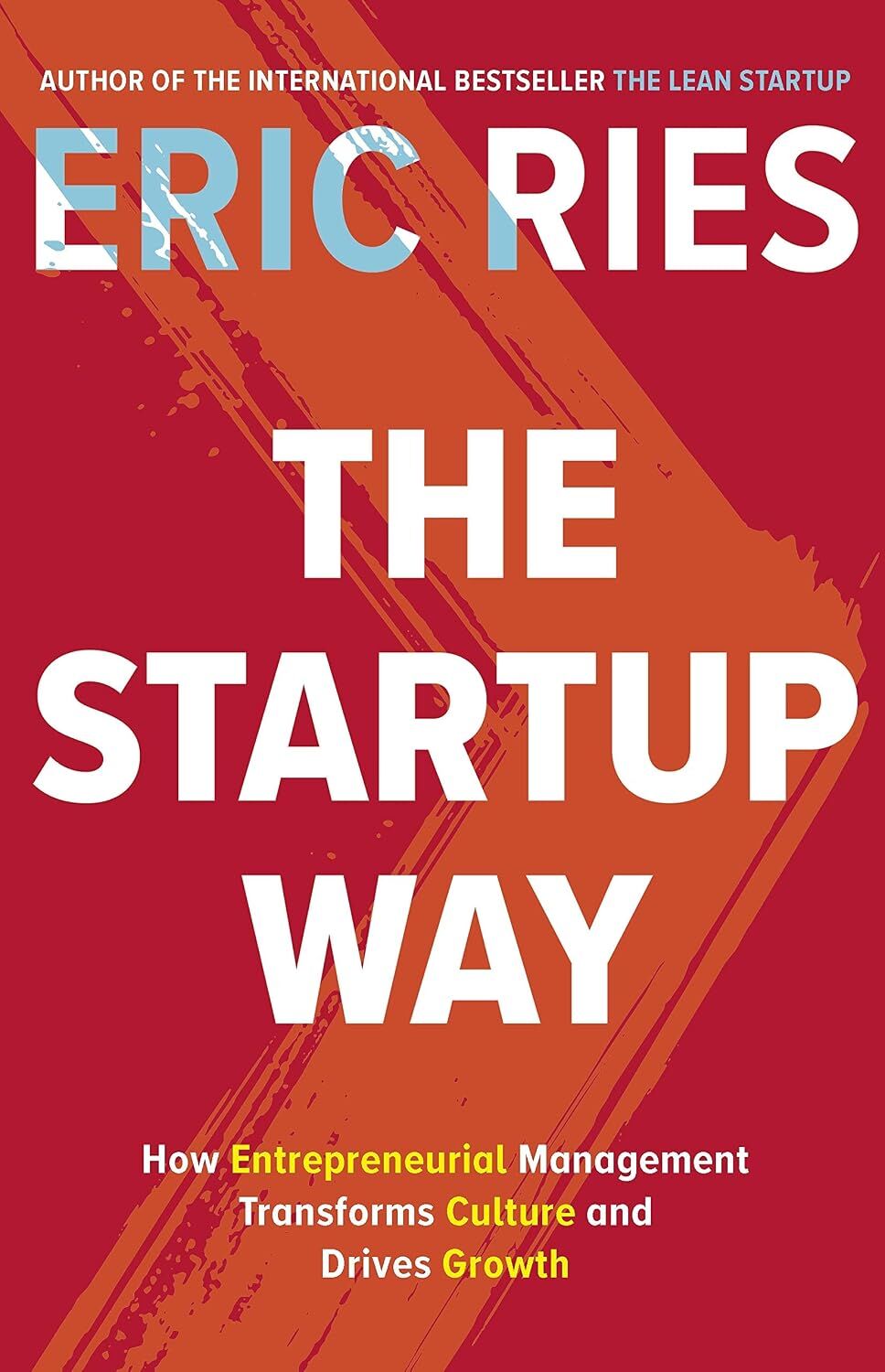
Portfolio Penguin Eric Ries Collection 2 Books Set - The Lean Startup & The Startup Way - Paperback - Business & Entrepreneurship Bundle for Founders and ManagersThis two-book collection brings together Eric Ries's most influential works on modern entrepreneurship: The Lean Startup and The Startup Way. Together they set out a rigorous, practical methodology for building successful businesses in conditions of extreme uncertainty, then show how those same lean principles can be scaled up to transform established, bureaucratic organisations. The Lean Startup introduced the world to concepts such as the minimum viable product, validated learning, and the build-measure-learn feedback loop. Drawing on his own experiences as a founder and advisor, Ries argues that startups succeed not through grand five-year plans but through rapid experimentation and continuous improvement. Ideal for founders, managers, and anyone curious about innovation, this set is a complete primer on lean thinking from the man who coined the term. The books are in brand new condition, published by Portfolio Penguin, and are suitable for adult readers.10,99 £*Shipping: 2,99 £Secure redirect to the provider
-
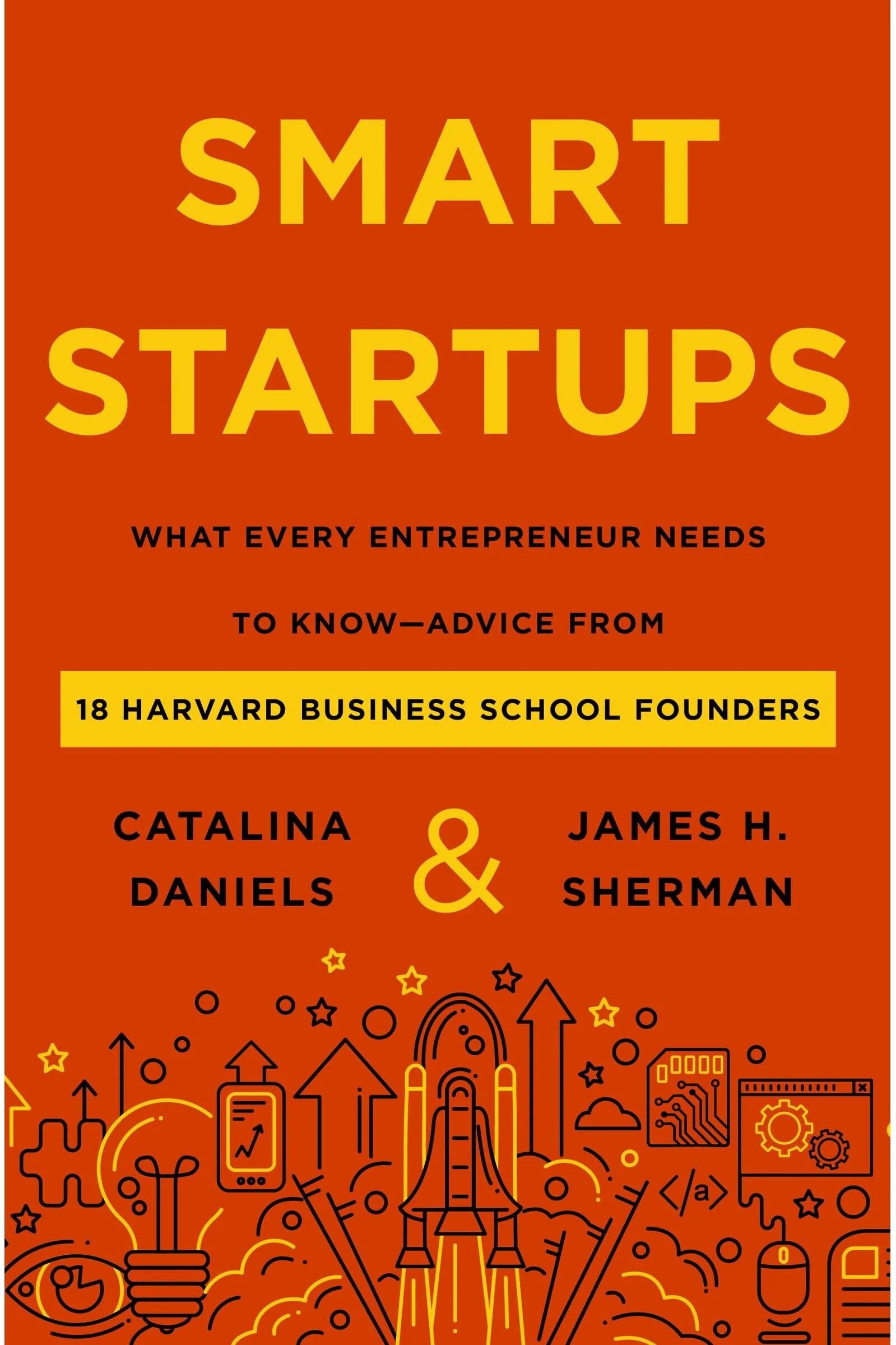
Harper Business Smart Startups: What Every Entrepreneur Needs to Know by Catalina Daniels & James H. Sherman - Hardback - Business & Entrepreneurship Non FictionSmart Startups: What Every Entrepreneur Needs to Know is a candid guide to building a company that lasts. Written by two Harvard Business School classmates turned founders and angel investors, it goes beyond classroom theory to show what actually happens inside eighteen startups launched by fellow HBS graduates. Packed with honest case studies, hard-won lessons, and unexpected pitfalls, this book is essential reading for anyone serious about turning an idea into a viable business. The authors, Catalina Daniels and James H. Sherman, met as classmates at Harvard Business School, where they studied the fundamentals of entrepreneurship together. Years later, after each had founded and exited multiple companies and become active angel investors, they discovered that their real-world experiences often diverged sharply from the conventional wisdom they learned in school.11,99 £*Shipping: 2,99 £Secure redirect to the provider
-
Flythe Consulting Arika Wall Sconce Pair, Pair, Satin NickelThe Arika Wall Sconce Pair is an adaptation of old-fashioned light fixtures, with an appealing design that will complement modern decor. The lacquered solid brass sconces have 4.75 dia.x7 H clear glass hurricanes that will protect your standard...179,00 $*Shipping: 22,95 $Secure redirect to the provider


-
What is an evolutionary brake?
An evolutionary brake refers to a factor or mechanism that slows down or limits the rate of evolution within a population or species. This can include environmental factors, such as limited resources or harsh conditions, that restrict the ability of individuals with certain traits to survive and reproduce. Additionally, genetic factors, such as mutations that are detrimental to an organism's survival or reproduction, can act as evolutionary brakes by preventing those traits from becoming more common in a population. Overall, evolutionary brakes help to maintain genetic diversity and prevent rapid and potentially harmful changes in a population. **
-
What are evolutionary directions in biology?
Evolutionary directions in biology refer to the changes and adaptations that occur in living organisms over time. These changes can include the development of new traits, behaviors, or structures that help organisms better survive and reproduce in their environment. Evolutionary directions can also involve the branching out of new species from a common ancestor, leading to the diversity of life we see today. By studying these evolutionary directions, scientists can gain insights into the history and relationships of different species, as well as how organisms may continue to evolve in the future. **
-
Do blood types have evolutionary advantages?
Yes, blood types are believed to have evolutionary advantages. For example, the ABO blood group system is thought to have evolved as a way to protect against certain diseases. Individuals with type O blood are less susceptible to severe malaria, while those with type A blood may have a higher risk of developing certain types of cancer. Additionally, the Rh factor in blood types is thought to have evolved as a way to protect against certain infections. Overall, blood types are believed to have evolved as a way to provide some level of protection against various diseases and infections. **
-
What is the evolutionary factor selection?
Evolution by natural selection is the process by which organisms with advantageous traits are more likely to survive, reproduce, and pass on those traits to their offspring. This leads to the gradual accumulation of beneficial traits in a population over generations, resulting in the adaptation of organisms to their environment. The key components of natural selection are variation in traits, heritability of those traits, and differential reproductive success based on those traits. Ultimately, natural selection is the driving force behind the diversity of life on Earth. **


Are there evolutionary reasons for ADHD?
There is evidence to suggest that there may be evolutionary reasons for ADHD. Some researchers propose that the traits associated with ADHD, such as impulsivity and hyperactivity, may have been advantageous in certain ancestral environments. For example, individuals with ADHD traits may have been better suited for tasks that required quick decision-making and action, such as hunting or gathering. However, in modern society, these traits can be disruptive and impairing, leading to the diagnosis of ADHD. Further research is needed to fully understand the evolutionary origins of ADHD. **
Can one force an evolutionary change?
Evolutionary change occurs over long periods of time through natural selection, genetic mutation, and other factors. It is not possible to force an evolutionary change in a specific direction or within a short period of time. However, humans have influenced the evolution of certain species through selective breeding and genetic engineering. These interventions can lead to changes in the genetic makeup of a population, but they are not considered natural evolutionary processes. Overall, while humans can influence the genetic makeup of a population, they cannot force an evolutionary change in the traditional sense. **
Top-Angebote
Products related to Evolutionary:
-
Harper Perennial Sex at Dawn: How We Mate, Why We Stray by Christopher Ryan & Cacilda Jethá - Paperback Non-Fiction - Evolutionary Psychology BestsellerSex at Dawn: How We Mate, Why We Stray is a thought-provoking exploration of human sexual evolution. Christopher Ryan and Cacilda Jethá challenge the standard narrative that humans are naturally monogamous, drawing on anthropology, primatology, and archaeology. This accessible and engaging paperback blends rigorous research with storytelling, inviting readers to rethink their assumptions about desire, fidelity, and the origins of modern romantic relationships. Written for curious readers, the book presents a bold and provocative argument that early humans lived in cooperative, egalitarian groups where food, childcare, and sexual partners were often shared. The authors draw on evidence from various fields to support their claim, offering a fresh perspective on human relationships and behavior. Published by Harper Perennial, this paperback is a new release with the ISBN 9780061707810.5,99 £*Shipping: 2,99 £Secure redirect to the provider
-
Portfolio Penguin Eric Ries Collection 2 Books Set - The Lean Startup & The Startup Way - Paperback - Business & Entrepreneurship Bundle for Founders and ManagersThis two-book collection brings together Eric Ries's most influential works on modern entrepreneurship: The Lean Startup and The Startup Way. Together they set out a rigorous, practical methodology for building successful businesses in conditions of extreme uncertainty, then show how those same lean principles can be scaled up to transform established, bureaucratic organisations. The Lean Startup introduced the world to concepts such as the minimum viable product, validated learning, and the build-measure-learn feedback loop. Drawing on his own experiences as a founder and advisor, Ries argues that startups succeed not through grand five-year plans but through rapid experimentation and continuous improvement. Ideal for founders, managers, and anyone curious about innovation, this set is a complete primer on lean thinking from the man who coined the term. The books are in brand new condition, published by Portfolio Penguin, and are suitable for adult readers.10,99 £*Shipping: 2,99 £Secure redirect to the provider
-
Do all evolutionary factors have to act in synthetic evolutionary theory?
In synthetic evolutionary theory, not all evolutionary factors have to act in isolation. Instead, the theory emphasizes the interaction and integration of multiple factors, such as genetic variation, natural selection, genetic drift, and gene flow, in shaping the evolutionary process. This approach recognizes that evolution is a complex and multifaceted phenomenon, and that the combined effects of these factors can lead to the emergence of new traits and species. By considering the interactions among these factors, synthetic evolutionary theory provides a more comprehensive understanding of the evolutionary process. **
-
Is love of evolutionary origin?
Yes, the concept of love is believed to have evolutionary origins. Evolutionary psychologists suggest that love developed as a mechanism to promote bonding and cooperation between individuals, which increased the chances of survival and reproduction. The feelings of attachment, care, and protection associated with love are thought to have evolved to ensure the successful raising of offspring. Therefore, love is considered to have evolved as an adaptive trait that has persisted over time due to its benefits for human survival and reproduction. **
-
What is an evolutionary brake?
An evolutionary brake refers to a factor or mechanism that slows down or limits the rate of evolution within a population or species. This can include environmental factors, such as limited resources or harsh conditions, that restrict the ability of individuals with certain traits to survive and reproduce. Additionally, genetic factors, such as mutations that are detrimental to an organism's survival or reproduction, can act as evolutionary brakes by preventing those traits from becoming more common in a population. Overall, evolutionary brakes help to maintain genetic diversity and prevent rapid and potentially harmful changes in a population. **
-
What are evolutionary directions in biology?
Evolutionary directions in biology refer to the changes and adaptations that occur in living organisms over time. These changes can include the development of new traits, behaviors, or structures that help organisms better survive and reproduce in their environment. Evolutionary directions can also involve the branching out of new species from a common ancestor, leading to the diversity of life we see today. By studying these evolutionary directions, scientists can gain insights into the history and relationships of different species, as well as how organisms may continue to evolve in the future. **
Similar search terms for Evolutionary
-
Harper Business Smart Startups: What Every Entrepreneur Needs to Know by Catalina Daniels & James H. Sherman - Hardback - Business & Entrepreneurship Non FictionSmart Startups: What Every Entrepreneur Needs to Know is a candid guide to building a company that lasts. Written by two Harvard Business School classmates turned founders and angel investors, it goes beyond classroom theory to show what actually happens inside eighteen startups launched by fellow HBS graduates. Packed with honest case studies, hard-won lessons, and unexpected pitfalls, this book is essential reading for anyone serious about turning an idea into a viable business. The authors, Catalina Daniels and James H. Sherman, met as classmates at Harvard Business School, where they studied the fundamentals of entrepreneurship together. Years later, after each had founded and exited multiple companies and become active angel investors, they discovered that their real-world experiences often diverged sharply from the conventional wisdom they learned in school.11,99 £*Shipping: 2,99 £Secure redirect to the provider
-
Flythe Consulting Arika Wall Sconce Pair, Pair, Satin NickelThe Arika Wall Sconce Pair is an adaptation of old-fashioned light fixtures, with an appealing design that will complement modern decor. The lacquered solid brass sconces have 4.75 dia.x7 H clear glass hurricanes that will protect your standard...179,00 $*Shipping: 22,95 $Secure redirect to the provider
-
Picador Bad Blood: Secrets and Lies in a Silicon Valley Startup by John Carreyrou - Paperback - True Crime Business Book - Theranos Scandal ExposéBad Blood is John Carreyrou's Pulitzer Prize-winning investigation into Theranos, the blood-testing startup once valued at over $9 billion before collapsing into one of the biggest corporate frauds in American history. This gripping true-crime business narrative follows founder Elizabeth Holmes from Silicon Valley darling to disgraced fraudster, exposing the culture of secrecy, intimidation, and deception that hid a technology which simply didn't work — with devastating consequences for real patients. In 2014, Elizabeth Holmes was celebrated as the next Steve Jobs: a charismatic Stanford dropout whose startup promised to revolutionise healthcare with a single drop of blood. Backed by high-profile investors and board members, Theranos raised hundreds of millions of dollars on the promise of miniaturised blood-testing devices that could run hundreds of tests. This book is a paperback edition published by Picador, suitable for adult readers (18+).4,99 £*Shipping: 2,99 £Secure redirect to the provider
-
Do blood types have evolutionary advantages?
Yes, blood types are believed to have evolutionary advantages. For example, the ABO blood group system is thought to have evolved as a way to protect against certain diseases. Individuals with type O blood are less susceptible to severe malaria, while those with type A blood may have a higher risk of developing certain types of cancer. Additionally, the Rh factor in blood types is thought to have evolved as a way to protect against certain infections. Overall, blood types are believed to have evolved as a way to provide some level of protection against various diseases and infections. **
-
What is the evolutionary factor selection?
Evolution by natural selection is the process by which organisms with advantageous traits are more likely to survive, reproduce, and pass on those traits to their offspring. This leads to the gradual accumulation of beneficial traits in a population over generations, resulting in the adaptation of organisms to their environment. The key components of natural selection are variation in traits, heritability of those traits, and differential reproductive success based on those traits. Ultimately, natural selection is the driving force behind the diversity of life on Earth. **
-
Are there evolutionary reasons for ADHD?
There is evidence to suggest that there may be evolutionary reasons for ADHD. Some researchers propose that the traits associated with ADHD, such as impulsivity and hyperactivity, may have been advantageous in certain ancestral environments. For example, individuals with ADHD traits may have been better suited for tasks that required quick decision-making and action, such as hunting or gathering. However, in modern society, these traits can be disruptive and impairing, leading to the diagnosis of ADHD. Further research is needed to fully understand the evolutionary origins of ADHD. **
-
Can one force an evolutionary change?
Evolutionary change occurs over long periods of time through natural selection, genetic mutation, and other factors. It is not possible to force an evolutionary change in a specific direction or within a short period of time. However, humans have influenced the evolution of certain species through selective breeding and genetic engineering. These interventions can lead to changes in the genetic makeup of a population, but they are not considered natural evolutionary processes. Overall, while humans can influence the genetic makeup of a population, they cannot force an evolutionary change in the traditional sense. **
* All prices are inclusive of VAT and, if applicable, plus shipping costs. The offer information is based on the details provided by the respective shop and is updated through automated processes. Real-time updates do not occur, so deviations can occur in individual cases. ** Note: Parts of this content were created by AI.