Buy firmengründung.eu ?
We are moving the project
firmengründung.eu .
Are you interested in purchasing the domain
firmengründung.eu ?
domain@kv-gmbh.de · 0541-91531010
Buy firmengründung.eu ?
Why do galaxies rotate?
Galaxies rotate due to the conservation of angular momentum. As the gas and dust that make up a galaxy collapse under gravity to form stars and other structures, any initial rotation present in the material is amplified. This rotation causes the galaxy to spin around its center of mass. The rotation of galaxies also helps to maintain their overall shape and stability. **
What are spiral galaxies?
Spiral galaxies are a type of galaxy characterized by their distinctive spiral arms that extend outwards from a central bulge. These arms are made up of stars, gas, and dust, and they give the galaxy a pinwheel-like appearance. Spiral galaxies are often found to be relatively young and active, with ongoing star formation occurring in their arms. Our own Milky Way galaxy is a spiral galaxy. **


Similar search terms for Galaxies
Top-Angebote
Products related to Galaxies:
-
Tiny Epic Galaxies Player Dice for Gamers, Official Accessory by Gamelyn Games, Ages 10+Expand your Tiny Epic Galaxies sessions with this set of player dice from Gamelyn Games. Designed for use with the Tiny Epic Galaxies tabletop game, these dice provide replacement or additional components for players who want to refresh their game set. The dice are supplied as a dedicated accessory pack and are intended for tabletop play rather than as a standalone game. They are suitable for owners of Tiny Epic Galaxies and may be useful when replacing missing or worn components, subject to compatibility with the relevant edition. This product is an official accessory and does not include the complete Tiny Epic Galaxies board game. Manufacturer: Gamelyn Games.16,17 £*Shipping: 3,95 £Secure redirect to the provider
-
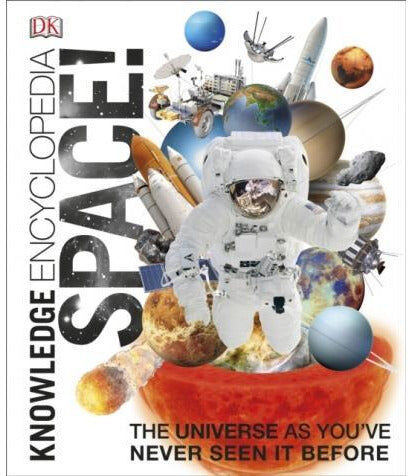
Dorling Kindersley DK Knowledge Encyclopedia Space The Ultimate Space & Astronomy Reference Guide for Kids and Families - Planets, Stars, Galaxies & the Universe ExplainExplore the wonders of the universe with the DK Knowledge Encyclopedia Space, an inspiring and visually stunning guide to outer space.Packed with high-definition photographs, 3D illustrations, infographics, facts, timelines, and scientific explanations, this encyclopedia takes readers on an unforgettable journey from Earth to the farthest reaches of the cosmos. Perfect for curious readers, young astronomers, and space enthusiasts, this book explains: The solar system, planets, moons, and dwarf planets Stars, nebulas, black holes, galaxies & cosmic phenomena Space exploration, astronauts & spacecraft The Big Bang, universe evolution & future missions The latest science discoveries explained in kid-friendly language A brilliant educational book for STEM learners, classrooms, home libraries, and children aged 8–14 who love space.9,99 £*Shipping: 2,99 £Secure redirect to the provider
-
Portfolio Penguin Eric Ries Collection 2 Books Set - The Lean Startup & The Startup Way - Paperback - Business & Entrepreneurship Bundle for Founders and ManagersThis two-book collection brings together Eric Ries's most influential works on modern entrepreneurship: The Lean Startup and The Startup Way. Together they set out a rigorous, practical methodology for building successful businesses in conditions of extreme uncertainty, then show how those same lean principles can be scaled up to transform established, bureaucratic organisations. The Lean Startup introduced the world to concepts such as the minimum viable product, validated learning, and the build-measure-learn feedback loop. Drawing on his own experiences as a founder and advisor, Ries argues that startups succeed not through grand five-year plans but through rapid experimentation and continuous improvement. Ideal for founders, managers, and anyone curious about innovation, this set is a complete primer on lean thinking from the man who coined the term. The books are in brand new condition, published by Portfolio Penguin, and are suitable for adult readers.10,99 £*Shipping: 2,99 £Secure redirect to the provider
-
Harper Business Smart Startups: What Every Entrepreneur Needs to Know by Catalina Daniels & James H. Sherman - Hardback - Business & Entrepreneurship Non FictionSmart Startups: What Every Entrepreneur Needs to Know is a candid guide to building a company that lasts. Written by two Harvard Business School classmates turned founders and angel investors, it goes beyond classroom theory to show what actually happens inside eighteen startups launched by fellow HBS graduates. Packed with honest case studies, hard-won lessons, and unexpected pitfalls, this book is essential reading for anyone serious about turning an idea into a viable business. The authors, Catalina Daniels and James H. Sherman, met as classmates at Harvard Business School, where they studied the fundamentals of entrepreneurship together. Years later, after each had founded and exited multiple companies and become active angel investors, they discovered that their real-world experiences often diverged sharply from the conventional wisdom they learned in school.11,99 £*Shipping: 2,99 £Secure redirect to the provider



-
Why are galaxies flat?
Galaxies are flat because of the way they form and rotate. When galaxies form, the gas and dust that make them up collapse into a spinning disk shape due to the conservation of angular momentum. This spinning motion causes the material to flatten out into a disk, much like how pizza dough flattens out when spun. The gravitational forces within the galaxy also contribute to this flat shape, as they pull the material towards the center of the galaxy, further flattening it out. **
-
Are there other galaxies?
Yes, there are other galaxies besides our own Milky Way. Scientists estimate that there are billions of galaxies in the universe, each containing billions of stars. Some of the closest galaxies to us include the Andromeda Galaxy and the Triangulum Galaxy. The study of these other galaxies helps us understand the vastness and diversity of the universe. **
-
Why are galaxies disk-shaped?
Galaxies are disk-shaped because of the way they form and evolve. When galaxies form, the gas and dust that make them up collapse under gravity, and as they spin, they flatten out into a disk shape. This is due to the conservation of angular momentum, which causes the material to flatten into a spinning disk as it collapses. Over time, the gravitational forces within the galaxy also help to maintain this disk shape. Additionally, the presence of a supermassive black hole at the center of many galaxies can also contribute to the disk shape by influencing the motion of stars and gas within the galaxy. **
-
What do galaxies revolve around?
Galaxies do not revolve around a single point or object. Instead, galaxies are part of galaxy clusters, which are groups of galaxies bound together by gravity. These galaxy clusters can revolve around a common center of mass, which is determined by the combined gravitational forces of all the galaxies within the cluster. Additionally, galaxies themselves can also rotate around their own centers, with stars and other celestial bodies within the galaxies orbiting around the galactic center. **


Which telescope is suitable for galaxies?
A telescope with a large aperture and high magnification is suitable for observing galaxies. The large aperture allows for more light to enter the telescope, making it easier to observe the faint light emitted by distant galaxies. High magnification helps to bring out the details and structure of the galaxies, allowing for a more detailed observation. Telescopes with good image quality and low levels of distortion are also important for observing galaxies, as they can be quite faint and distant. **
Is there really billions of galaxies?
Yes, there are billions of galaxies in the universe. The exact number is difficult to determine, but estimates suggest that there are at least 100 billion galaxies in the observable universe. Each of these galaxies contains billions to trillions of stars, along with various other celestial objects such as planets, nebulae, and black holes. The vastness of the universe and the sheer number of galaxies within it is truly awe-inspiring and humbling. **
Top-Angebote
Products related to Galaxies:
-
Antonina Vella Galaxies White WallpaperSculptural shapes create a universe of textural, raised, freeform silhouettes on modern color in pattern Galaxies. This Galaxies Wallpaper measures approximately 27 inches wide by 27 feet long, covering About 60.8 square feet per roll.187,00 $*Shipping: 0,00 $Secure redirect to the provider
-
Star Command Galaxies Steam CD KeyStar Command Galaxies: A Galactic Adventure Star Command Galaxies is a captivating real-time strategy and adventure game that immerses players in the role of a starship captain. Developed by Warballoon, this game offers a unique blend of management, exploration, and combat. Key features include: Ship Customization: Players can design and upgrade their starships, equipping them with various weapons, shields, and other enhancements. Crew Management: Build a loyal crew of officers and specialists, each with their own unique skills and personalities. Galactic Exploration: Embark on exciting journeys through a randomly generated universe, discovering new planets, trading with alien civilizations, and encountering unexpected challenges. Intense Battles: Engage in thrilling space battles against enemy ships, using strategic maneuvers and tactical decisions to outmaneuver and defeat your opponents. Retro Pixel Art: The game's charming pixel art style evokes a nostalgic feel while still delivering a visually stunning experience.2,10 £*Shipping: 0,00 £Secure redirect to the provider
-
Tiny Epic Galaxies Player Dice for Gamers, Official Accessory by Gamelyn Games, Ages 10+Expand your Tiny Epic Galaxies sessions with this set of player dice from Gamelyn Games. Designed for use with the Tiny Epic Galaxies tabletop game, these dice provide replacement or additional components for players who want to refresh their game set. The dice are supplied as a dedicated accessory pack and are intended for tabletop play rather than as a standalone game. They are suitable for owners of Tiny Epic Galaxies and may be useful when replacing missing or worn components, subject to compatibility with the relevant edition. This product is an official accessory and does not include the complete Tiny Epic Galaxies board game. Manufacturer: Gamelyn Games.16,17 £*Shipping: 3,95 £Secure redirect to the provider
-
Dorling Kindersley DK Knowledge Encyclopedia Space The Ultimate Space & Astronomy Reference Guide for Kids and Families - Planets, Stars, Galaxies & the Universe ExplainExplore the wonders of the universe with the DK Knowledge Encyclopedia Space, an inspiring and visually stunning guide to outer space.Packed with high-definition photographs, 3D illustrations, infographics, facts, timelines, and scientific explanations, this encyclopedia takes readers on an unforgettable journey from Earth to the farthest reaches of the cosmos. Perfect for curious readers, young astronomers, and space enthusiasts, this book explains: The solar system, planets, moons, and dwarf planets Stars, nebulas, black holes, galaxies & cosmic phenomena Space exploration, astronauts & spacecraft The Big Bang, universe evolution & future missions The latest science discoveries explained in kid-friendly language A brilliant educational book for STEM learners, classrooms, home libraries, and children aged 8–14 who love space.9,99 £*Shipping: 2,99 £Secure redirect to the provider
-
Why do galaxies rotate?
Galaxies rotate due to the conservation of angular momentum. As the gas and dust that make up a galaxy collapse under gravity to form stars and other structures, any initial rotation present in the material is amplified. This rotation causes the galaxy to spin around its center of mass. The rotation of galaxies also helps to maintain their overall shape and stability. **
-
What are spiral galaxies?
Spiral galaxies are a type of galaxy characterized by their distinctive spiral arms that extend outwards from a central bulge. These arms are made up of stars, gas, and dust, and they give the galaxy a pinwheel-like appearance. Spiral galaxies are often found to be relatively young and active, with ongoing star formation occurring in their arms. Our own Milky Way galaxy is a spiral galaxy. **
-
Why are galaxies flat?
Galaxies are flat because of the way they form and rotate. When galaxies form, the gas and dust that make them up collapse into a spinning disk shape due to the conservation of angular momentum. This spinning motion causes the material to flatten out into a disk, much like how pizza dough flattens out when spun. The gravitational forces within the galaxy also contribute to this flat shape, as they pull the material towards the center of the galaxy, further flattening it out. **
-
Are there other galaxies?
Yes, there are other galaxies besides our own Milky Way. Scientists estimate that there are billions of galaxies in the universe, each containing billions of stars. Some of the closest galaxies to us include the Andromeda Galaxy and the Triangulum Galaxy. The study of these other galaxies helps us understand the vastness and diversity of the universe. **
Similar search terms for Galaxies
-
Portfolio Penguin Eric Ries Collection 2 Books Set - The Lean Startup & The Startup Way - Paperback - Business & Entrepreneurship Bundle for Founders and ManagersThis two-book collection brings together Eric Ries's most influential works on modern entrepreneurship: The Lean Startup and The Startup Way. Together they set out a rigorous, practical methodology for building successful businesses in conditions of extreme uncertainty, then show how those same lean principles can be scaled up to transform established, bureaucratic organisations. The Lean Startup introduced the world to concepts such as the minimum viable product, validated learning, and the build-measure-learn feedback loop. Drawing on his own experiences as a founder and advisor, Ries argues that startups succeed not through grand five-year plans but through rapid experimentation and continuous improvement. Ideal for founders, managers, and anyone curious about innovation, this set is a complete primer on lean thinking from the man who coined the term. The books are in brand new condition, published by Portfolio Penguin, and are suitable for adult readers.10,99 £*Shipping: 2,99 £Secure redirect to the provider
-
Harper Business Smart Startups: What Every Entrepreneur Needs to Know by Catalina Daniels & James H. Sherman - Hardback - Business & Entrepreneurship Non FictionSmart Startups: What Every Entrepreneur Needs to Know is a candid guide to building a company that lasts. Written by two Harvard Business School classmates turned founders and angel investors, it goes beyond classroom theory to show what actually happens inside eighteen startups launched by fellow HBS graduates. Packed with honest case studies, hard-won lessons, and unexpected pitfalls, this book is essential reading for anyone serious about turning an idea into a viable business. The authors, Catalina Daniels and James H. Sherman, met as classmates at Harvard Business School, where they studied the fundamentals of entrepreneurship together. Years later, after each had founded and exited multiple companies and become active angel investors, they discovered that their real-world experiences often diverged sharply from the conventional wisdom they learned in school.11,99 £*Shipping: 2,99 £Secure redirect to the provider
-
Usborne Lift-The-Flap Look Inside: Space by Rob Lloyd Jones - An interactive lift-the-flap introduction to galaxies, stars and the moon for young chilWhy do stars shine? And how was the moon made? Children can blast off into space with this fantastic interactive flap book revealing the secrets of the Universe. Vibrant illustrations and simple explanations combined with over 70 flaps to lift. Each double page covers a different topic, including 'Glittering galaxies', 'On the Moon' and 'Space Station'.5,99 £*Shipping: 2,99 £Secure redirect to the provider
-
Picador Bad Blood: Secrets and Lies in a Silicon Valley Startup by John Carreyrou - Paperback - True Crime Business Book - Theranos Scandal ExposéBad Blood is John Carreyrou's Pulitzer Prize-winning investigation into Theranos, the blood-testing startup once valued at over $9 billion before collapsing into one of the biggest corporate frauds in American history. This gripping true-crime business narrative follows founder Elizabeth Holmes from Silicon Valley darling to disgraced fraudster, exposing the culture of secrecy, intimidation, and deception that hid a technology which simply didn't work — with devastating consequences for real patients. In 2014, Elizabeth Holmes was celebrated as the next Steve Jobs: a charismatic Stanford dropout whose startup promised to revolutionise healthcare with a single drop of blood. Backed by high-profile investors and board members, Theranos raised hundreds of millions of dollars on the promise of miniaturised blood-testing devices that could run hundreds of tests. This book is a paperback edition published by Picador, suitable for adult readers (18+).4,99 £*Shipping: 2,99 £Secure redirect to the provider
-
Why are galaxies disk-shaped?
Galaxies are disk-shaped because of the way they form and evolve. When galaxies form, the gas and dust that make them up collapse under gravity, and as they spin, they flatten out into a disk shape. This is due to the conservation of angular momentum, which causes the material to flatten into a spinning disk as it collapses. Over time, the gravitational forces within the galaxy also help to maintain this disk shape. Additionally, the presence of a supermassive black hole at the center of many galaxies can also contribute to the disk shape by influencing the motion of stars and gas within the galaxy. **
-
What do galaxies revolve around?
Galaxies do not revolve around a single point or object. Instead, galaxies are part of galaxy clusters, which are groups of galaxies bound together by gravity. These galaxy clusters can revolve around a common center of mass, which is determined by the combined gravitational forces of all the galaxies within the cluster. Additionally, galaxies themselves can also rotate around their own centers, with stars and other celestial bodies within the galaxies orbiting around the galactic center. **
-
Which telescope is suitable for galaxies?
A telescope with a large aperture and high magnification is suitable for observing galaxies. The large aperture allows for more light to enter the telescope, making it easier to observe the faint light emitted by distant galaxies. High magnification helps to bring out the details and structure of the galaxies, allowing for a more detailed observation. Telescopes with good image quality and low levels of distortion are also important for observing galaxies, as they can be quite faint and distant. **
-
Is there really billions of galaxies?
Yes, there are billions of galaxies in the universe. The exact number is difficult to determine, but estimates suggest that there are at least 100 billion galaxies in the observable universe. Each of these galaxies contains billions to trillions of stars, along with various other celestial objects such as planets, nebulae, and black holes. The vastness of the universe and the sheer number of galaxies within it is truly awe-inspiring and humbling. **
* All prices are inclusive of VAT and, if applicable, plus shipping costs. The offer information is based on the details provided by the respective shop and is updated through automated processes. Real-time updates do not occur, so deviations can occur in individual cases. ** Note: Parts of this content were created by AI.