Buy firmengründung.eu ?
We are moving the project
firmengründung.eu .
Are you interested in purchasing the domain
firmengründung.eu ?
domain@kv-gmbh.de · 0541-91531010
Buy firmengründung.eu ?
What is the difference between a prediction interval and a confidence interval?
A prediction interval is used to estimate the range in which a future observation will fall, taking into account both the variability in the data and the uncertainty in the prediction. On the other hand, a confidence interval is used to estimate the range in which the true population parameter (such as the mean or proportion) will fall, based on a sample of data. In other words, a prediction interval is used for making individual predictions, while a confidence interval is used for estimating population parameters. **
What is the difference between a fluctuation interval and a confidence interval?
A fluctuation interval and a confidence interval are both statistical concepts, but they have different meanings. A fluctuation interval refers to the range within which a variable is expected to fluctuate over time, while a confidence interval refers to the range within which a population parameter is estimated to lie with a certain level of confidence. In other words, a fluctuation interval relates to the variability of a single variable, while a confidence interval relates to the precision of an estimate of a population parameter. **


Similar search terms for Interval
Top-Angebote
Products related to Interval:
-
Inspired Deals 2.3 Inch LED Gym Timer With Remote Control For Fitness Training, Countdown & Interval Workouts blue Red DigitsStay focused, motivated, and in control of every workout with this versatile digital interval timer designed for athletes, coaches, and fitness enthusiasts. Featuring a bright 2.3inch LED display, it delivers clear visibility from across the room,...119,97 $*Shipping: 0,00 $Secure redirect to the provider
-
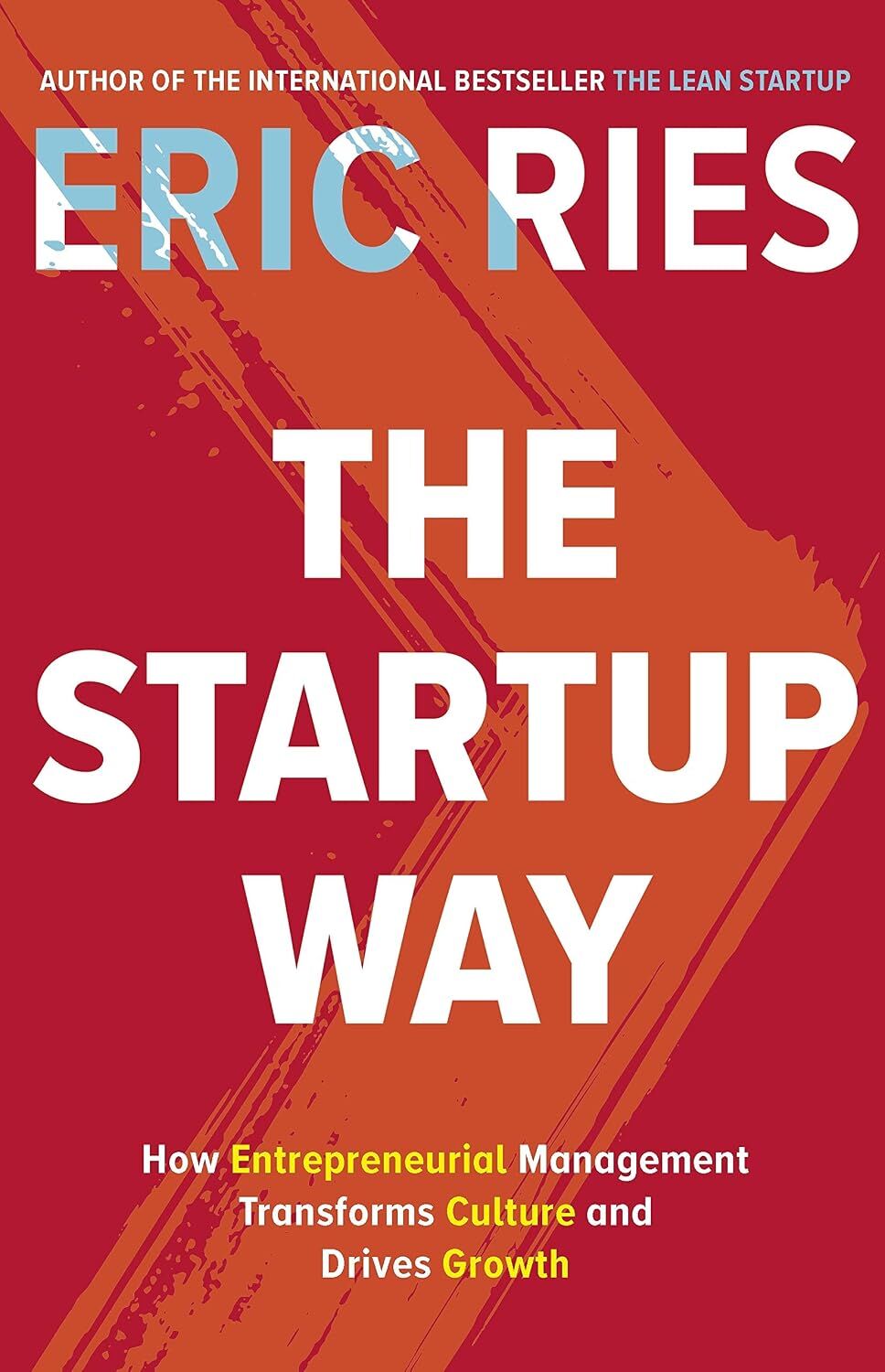
Portfolio Penguin Eric Ries Collection 2 Books Set - The Lean Startup & The Startup Way - Paperback - Business & Entrepreneurship Bundle for Founders and ManagersThis two-book collection brings together Eric Ries's most influential works on modern entrepreneurship: The Lean Startup and The Startup Way. Together they set out a rigorous, practical methodology for building successful businesses in conditions of extreme uncertainty, then show how those same lean principles can be scaled up to transform established, bureaucratic organisations. The Lean Startup introduced the world to concepts such as the minimum viable product, validated learning, and the build-measure-learn feedback loop. Drawing on his own experiences as a founder and advisor, Ries argues that startups succeed not through grand five-year plans but through rapid experimentation and continuous improvement. Ideal for founders, managers, and anyone curious about innovation, this set is a complete primer on lean thinking from the man who coined the term. The books are in brand new condition, published by Portfolio Penguin, and are suitable for adult readers.10,99 £*Shipping: 2,99 £Secure redirect to the provider
-
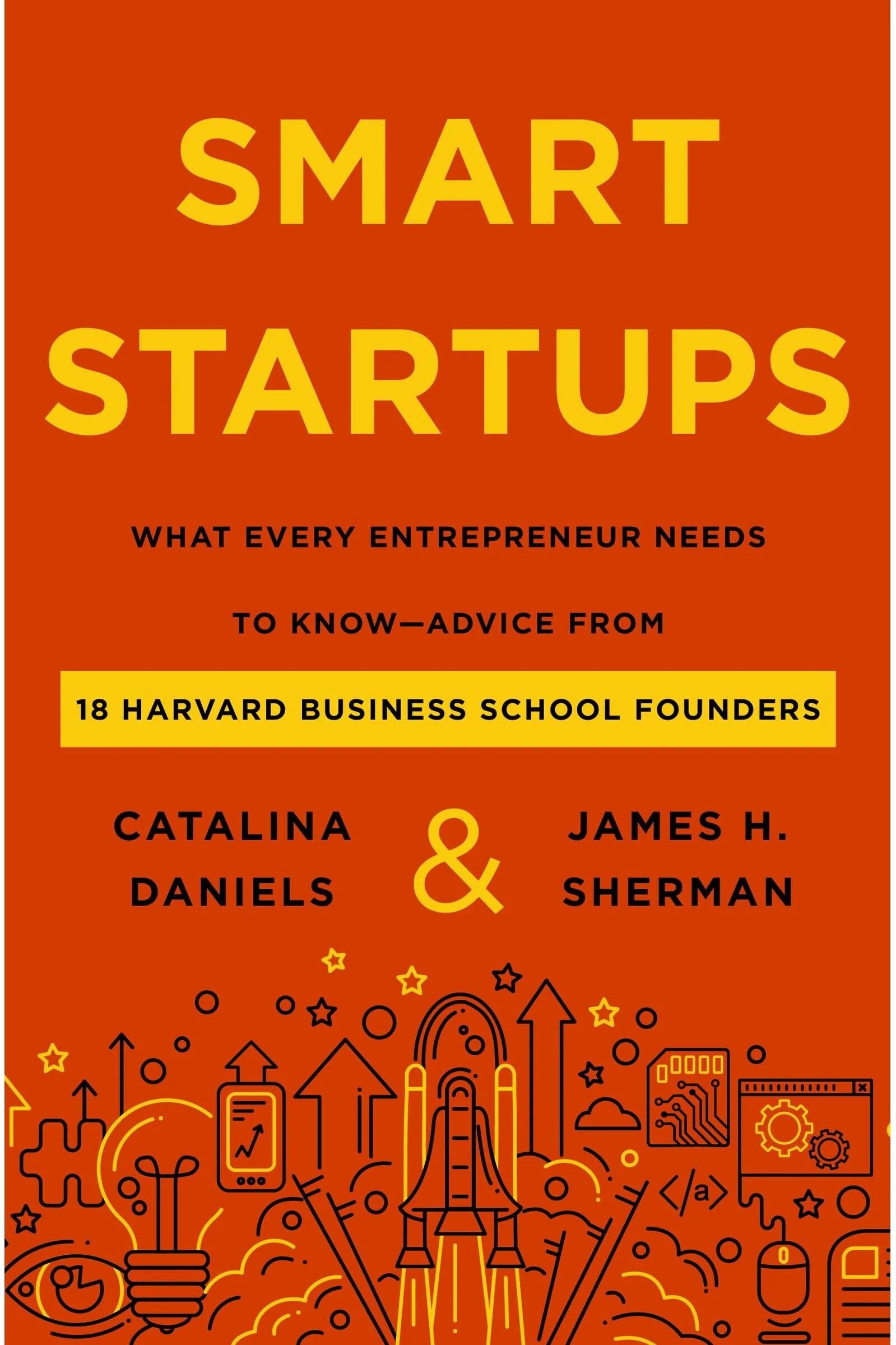
Harper Business Smart Startups: What Every Entrepreneur Needs to Know by Catalina Daniels & James H. Sherman - Hardback - Business & Entrepreneurship Non FictionSmart Startups: What Every Entrepreneur Needs to Know is a candid guide to building a company that lasts. Written by two Harvard Business School classmates turned founders and angel investors, it goes beyond classroom theory to show what actually happens inside eighteen startups launched by fellow HBS graduates. Packed with honest case studies, hard-won lessons, and unexpected pitfalls, this book is essential reading for anyone serious about turning an idea into a viable business. The authors, Catalina Daniels and James H. Sherman, met as classmates at Harvard Business School, where they studied the fundamentals of entrepreneurship together. Years later, after each had founded and exited multiple companies and become active angel investors, they discovered that their real-world experiences often diverged sharply from the conventional wisdom they learned in school.11,99 £*Shipping: 2,99 £Secure redirect to the provider

-
What is the difference between a perfect interval and a major interval?
A perfect interval is a type of interval that is either unison, fourth, fifth, or octave, and it is considered to have a "perfect" quality due to its strong and stable sound. On the other hand, a major interval is a type of interval that is one half step larger than a perfect interval. For example, a perfect fifth consists of seven half steps, while a major fifth consists of eight half steps. This difference in size gives major intervals a slightly brighter and more consonant sound compared to perfect intervals. **
-
What is an open interval?
An open interval is a set of real numbers between two specified values, where the endpoints are not included in the interval. For example, the open interval (1, 5) includes all real numbers greater than 1 and less than 5, but does not include 1 or 5 themselves. Open intervals are denoted using parentheses to indicate that the endpoints are excluded. **
-
Can you explain interval notation?
Interval notation is a way to represent a set of real numbers using brackets and parentheses. A square bracket [ is used to indicate that the endpoint is included in the interval, while a parenthesis ( indicates that the endpoint is not included. For example, the interval [2, 5) includes all real numbers greater than or equal to 2 but less than 5. Interval notation is commonly used to describe ranges of values in mathematics and is a concise way to represent sets of numbers. **
-
What is a keyframe interval?
A keyframe interval is a parameter in video encoding that determines how often a full frame is stored in a video stream. Keyframes are complete frames that contain all the information needed to display the image, while non-keyframes only contain information about the changes from the previous frame. The keyframe interval is important for video compression as it affects the quality of the video and the efficiency of the encoding process. A shorter keyframe interval results in better video quality but larger file sizes, while a longer keyframe interval reduces file size but may impact video quality. **

What does an interval indicate?
An interval indicates the range of values between two points on a number line. It shows all the numbers that fall within that range, including the endpoints. Intervals can be open, closed, half-open, or half-closed, depending on whether the endpoints are included in the set of values. They are commonly used in mathematics to describe sets of numbers or solutions to inequalities. **
What is meant by interval?
An interval in mathematics refers to a set of numbers that are within a specific range. It includes all the numbers between two given values, including the endpoints. For example, the interval [2, 5] includes all numbers from 2 to 5, including 2 and 5. Intervals can be open (excluding the endpoints), closed (including the endpoints), or half-open (including one endpoint but not the other). **
Top-Angebote
Products related to Interval:
-
Smart Shopping Spot Pro Interval Workout Timer Digital Interval Timer For HIIT, Boxing, Yoga & Fitness Training Pro Interval Workout Timer Digital Interval Timer For HIIT, Boxing, Yoga & Fitness TrainingTake every workout to the next level with a timer that keeps you focused on performance instead of the clock. This interval timer is designed for athletes, fitness enthusiasts, coaches, and anyone following structured training routines. Whether...64,97 $*Shipping: 0,00 $Secure redirect to the provider
-
Inspired Deals 2.3 Inch LED Gym Timer With Remote Control For Fitness Training, Countdown & Interval Workouts blue Red DigitsStay focused, motivated, and in control of every workout with this versatile digital interval timer designed for athletes, coaches, and fitness enthusiasts. Featuring a bright 2.3inch LED display, it delivers clear visibility from across the room,...119,97 $*Shipping: 0,00 $Secure redirect to the provider
-
What is the difference between a prediction interval and a confidence interval?
A prediction interval is used to estimate the range in which a future observation will fall, taking into account both the variability in the data and the uncertainty in the prediction. On the other hand, a confidence interval is used to estimate the range in which the true population parameter (such as the mean or proportion) will fall, based on a sample of data. In other words, a prediction interval is used for making individual predictions, while a confidence interval is used for estimating population parameters. **
-
What is the difference between a fluctuation interval and a confidence interval?
A fluctuation interval and a confidence interval are both statistical concepts, but they have different meanings. A fluctuation interval refers to the range within which a variable is expected to fluctuate over time, while a confidence interval refers to the range within which a population parameter is estimated to lie with a certain level of confidence. In other words, a fluctuation interval relates to the variability of a single variable, while a confidence interval relates to the precision of an estimate of a population parameter. **
-
What is the difference between a perfect interval and a major interval?
A perfect interval is a type of interval that is either unison, fourth, fifth, or octave, and it is considered to have a "perfect" quality due to its strong and stable sound. On the other hand, a major interval is a type of interval that is one half step larger than a perfect interval. For example, a perfect fifth consists of seven half steps, while a major fifth consists of eight half steps. This difference in size gives major intervals a slightly brighter and more consonant sound compared to perfect intervals. **
-
What is an open interval?
An open interval is a set of real numbers between two specified values, where the endpoints are not included in the interval. For example, the open interval (1, 5) includes all real numbers greater than 1 and less than 5, but does not include 1 or 5 themselves. Open intervals are denoted using parentheses to indicate that the endpoints are excluded. **
Similar search terms for Interval
-
Portfolio Penguin Eric Ries Collection 2 Books Set - The Lean Startup & The Startup Way - Paperback - Business & Entrepreneurship Bundle for Founders and ManagersThis two-book collection brings together Eric Ries's most influential works on modern entrepreneurship: The Lean Startup and The Startup Way. Together they set out a rigorous, practical methodology for building successful businesses in conditions of extreme uncertainty, then show how those same lean principles can be scaled up to transform established, bureaucratic organisations. The Lean Startup introduced the world to concepts such as the minimum viable product, validated learning, and the build-measure-learn feedback loop. Drawing on his own experiences as a founder and advisor, Ries argues that startups succeed not through grand five-year plans but through rapid experimentation and continuous improvement. Ideal for founders, managers, and anyone curious about innovation, this set is a complete primer on lean thinking from the man who coined the term. The books are in brand new condition, published by Portfolio Penguin, and are suitable for adult readers.10,99 £*Shipping: 2,99 £Secure redirect to the provider
-
Harper Business Smart Startups: What Every Entrepreneur Needs to Know by Catalina Daniels & James H. Sherman - Hardback - Business & Entrepreneurship Non FictionSmart Startups: What Every Entrepreneur Needs to Know is a candid guide to building a company that lasts. Written by two Harvard Business School classmates turned founders and angel investors, it goes beyond classroom theory to show what actually happens inside eighteen startups launched by fellow HBS graduates. Packed with honest case studies, hard-won lessons, and unexpected pitfalls, this book is essential reading for anyone serious about turning an idea into a viable business. The authors, Catalina Daniels and James H. Sherman, met as classmates at Harvard Business School, where they studied the fundamentals of entrepreneurship together. Years later, after each had founded and exited multiple companies and become active angel investors, they discovered that their real-world experiences often diverged sharply from the conventional wisdom they learned in school.11,99 £*Shipping: 2,99 £Secure redirect to the provider
-
Picador Bad Blood: Secrets and Lies in a Silicon Valley Startup by John Carreyrou - Paperback - True Crime Business Book - Theranos Scandal ExposéBad Blood is John Carreyrou's Pulitzer Prize-winning investigation into Theranos, the blood-testing startup once valued at over $9 billion before collapsing into one of the biggest corporate frauds in American history. This gripping true-crime business narrative follows founder Elizabeth Holmes from Silicon Valley darling to disgraced fraudster, exposing the culture of secrecy, intimidation, and deception that hid a technology which simply didn't work — with devastating consequences for real patients. In 2014, Elizabeth Holmes was celebrated as the next Steve Jobs: a charismatic Stanford dropout whose startup promised to revolutionise healthcare with a single drop of blood. Backed by high-profile investors and board members, Theranos raised hundreds of millions of dollars on the promise of miniaturised blood-testing devices that could run hundreds of tests. This book is a paperback edition published by Picador, suitable for adult readers (18+).4,99 £*Shipping: 2,99 £Secure redirect to the provider
-
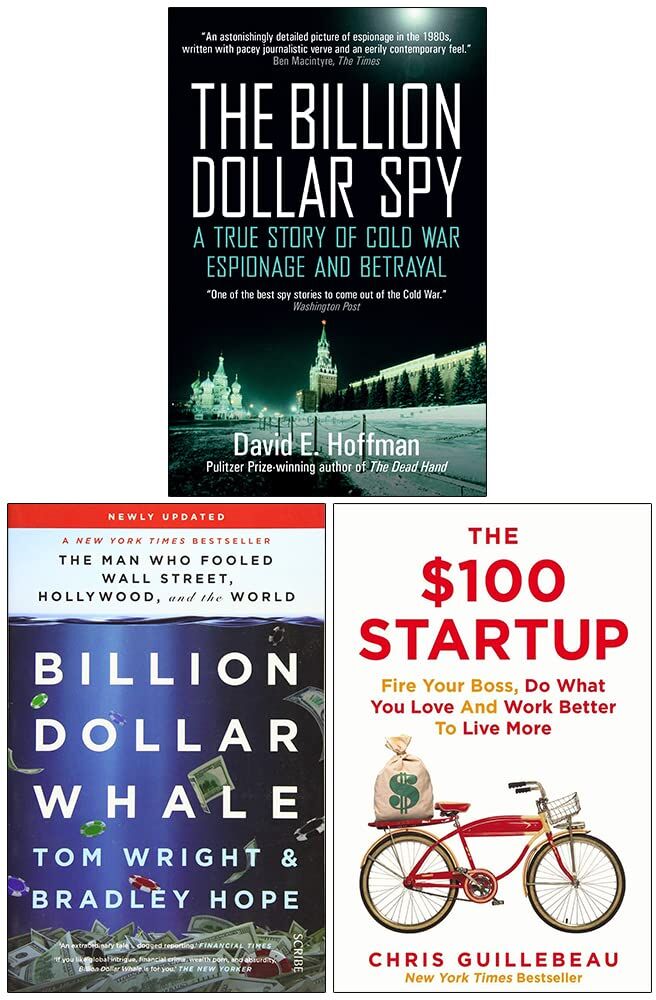
Various Publishers Billion Dollar Spy, Billion Dollar Whale, The $100 Startup - 3 Books Collection Set - Paperback - True Crime, Finance & Business Non-Fiction Gift SetThis three-book non-fiction collection includes The Billion Dollar Spy by David E. Hoffman, Billion Dollar Whale by Tom Wright and Bradley Hope, and The $100 Startup by Chris Guillebeau. The books offer gripping true stories of espionage and financial fraud, alongside practical entrepreneurship advice. The Billion Dollar Spy uncovers Cold War spy-craft in Moscow, Billion Dollar Whale exposes one of history's largest financial scandals, and The $100 Startup delivers a hands-on blueprint for building a business from scratch. The books are in new condition, published by Icon Books, Scribe UK, and Pan Macmillan, and are suitable for adult readers.13,99 £*Shipping: 2,99 £Secure redirect to the provider
-
Can you explain interval notation?
Interval notation is a way to represent a set of real numbers using brackets and parentheses. A square bracket [ is used to indicate that the endpoint is included in the interval, while a parenthesis ( indicates that the endpoint is not included. For example, the interval [2, 5) includes all real numbers greater than or equal to 2 but less than 5. Interval notation is commonly used to describe ranges of values in mathematics and is a concise way to represent sets of numbers. **
-
What is a keyframe interval?
A keyframe interval is a parameter in video encoding that determines how often a full frame is stored in a video stream. Keyframes are complete frames that contain all the information needed to display the image, while non-keyframes only contain information about the changes from the previous frame. The keyframe interval is important for video compression as it affects the quality of the video and the efficiency of the encoding process. A shorter keyframe interval results in better video quality but larger file sizes, while a longer keyframe interval reduces file size but may impact video quality. **
-
What does an interval indicate?
An interval indicates the range of values between two points on a number line. It shows all the numbers that fall within that range, including the endpoints. Intervals can be open, closed, half-open, or half-closed, depending on whether the endpoints are included in the set of values. They are commonly used in mathematics to describe sets of numbers or solutions to inequalities. **
-
What is meant by interval?
An interval in mathematics refers to a set of numbers that are within a specific range. It includes all the numbers between two given values, including the endpoints. For example, the interval [2, 5] includes all numbers from 2 to 5, including 2 and 5. Intervals can be open (excluding the endpoints), closed (including the endpoints), or half-open (including one endpoint but not the other). **
* All prices are inclusive of VAT and, if applicable, plus shipping costs. The offer information is based on the details provided by the respective shop and is updated through automated processes. Real-time updates do not occur, so deviations can occur in individual cases. ** Note: Parts of this content were created by AI.