Buy firmengründung.eu ?
We are moving the project
firmengründung.eu .
Are you interested in purchasing the domain
firmengründung.eu ?
domain@kv-gmbh.de · 0541-91531010
Buy firmengründung.eu ?
What is needed for studying orthodontics?
To study orthodontics, one typically needs to have a bachelor's degree in a related field such as biology or chemistry. After completing a bachelor's degree, one must attend dental school to earn a Doctor of Dental Surgery (DDS) or Doctor of Dental Medicine (DMD) degree. Following dental school, additional training and education in orthodontics is required through a postgraduate orthodontic residency program, which can take an additional 2-3 years to complete. **
What are bio-arches or orthodontics?
Bio-arches, also known as orthodontics, are a branch of dentistry that focuses on correcting irregularities in the teeth and jaws. This can include issues such as misaligned teeth, overbites, underbites, and crowded teeth. Orthodontic treatment often involves the use of braces, aligners, and other dental appliances to gradually move the teeth into their proper positions. The goal of bio-arches or orthodontics is to improve the function and appearance of the teeth and jaws, as well as overall oral health. **

Similar search terms for Orthodontics
Top-Angebote
Products related to Orthodontics:
-
Corega Orthodontics & Splints 36 TabletsHealth and Beauty Oral Care Corega Orthodontics & Splints 36 Tablets Effective cleaning of dental appliances. Eliminates 99.99% of bacteria. Corega braces and splint cleaning tablets provide fast, effective daily cleaning of any dental appliance. They gently remove stains without damaging the prosthesis, restoring its original color. They reduce the accumulation of bacterial plaque and tartar. They eliminate 99.99% of bacteria. Corega orthodontic and splint cleaning tablets are indicated for cleaning dental appliances such as:- Aligners or retainers. - Invisible orthodontics. - Discharge splints. - Removable metal appliances. - Sports mouthguards. Instructions for use: - Place 1 tablet in a glass with enough warm water to completely cover the dental appliance. - Submerge the prosthesis and let the product act for 3-5 minutes. - Remove the prosthesis and clean it with the solution using a soft brush. - Rinse the prosthesis with running water. - Discard the remaining solution after use.8,30 £*Shipping: 3,99 £Secure redirect to the provider
-
Corega Orthodontics & Splints Daily Cleanser 66 TabletsHealth and Beauty Oral Care Corega Orthodontics & Splints Daily Cleanser 66 Tablets Wearing braces can cause bacteria to build up and cause bad breath, so we've developed a daily antibacterial cleaner to help keep your braces clean and fresh. Our NEW Corega Orthodontics & Braces Antibacterial Daily Cleansing Tablets have been developed with Crystal Clear Technology—to help keep your braces looking their best, when used as directed. The cleanser formulation is designed to remove stains, help restore the original color, and also kill odor-causing bacteria and viruses.*13,69 £*Shipping: 3,99 £Secure redirect to the provider
-
Portfolio Penguin Eric Ries Collection 2 Books Set - The Lean Startup & The Startup Way - Paperback - Business & Entrepreneurship Bundle for Founders and ManagersThis two-book collection brings together Eric Ries's most influential works on modern entrepreneurship: The Lean Startup and The Startup Way. Together they set out a rigorous, practical methodology for building successful businesses in conditions of extreme uncertainty, then show how those same lean principles can be scaled up to transform established, bureaucratic organisations. The Lean Startup introduced the world to concepts such as the minimum viable product, validated learning, and the build-measure-learn feedback loop. Drawing on his own experiences as a founder and advisor, Ries argues that startups succeed not through grand five-year plans but through rapid experimentation and continuous improvement. Ideal for founders, managers, and anyone curious about innovation, this set is a complete primer on lean thinking from the man who coined the term. The books are in brand new condition, published by Portfolio Penguin, and are suitable for adult readers.10,99 £*Shipping: 2,99 £Secure redirect to the provider
-
Harper Business Smart Startups: What Every Entrepreneur Needs to Know by Catalina Daniels & James H. Sherman - Hardback - Business & Entrepreneurship Non FictionSmart Startups: What Every Entrepreneur Needs to Know is a candid guide to building a company that lasts. Written by two Harvard Business School classmates turned founders and angel investors, it goes beyond classroom theory to show what actually happens inside eighteen startups launched by fellow HBS graduates. Packed with honest case studies, hard-won lessons, and unexpected pitfalls, this book is essential reading for anyone serious about turning an idea into a viable business. The authors, Catalina Daniels and James H. Sherman, met as classmates at Harvard Business School, where they studied the fundamentals of entrepreneurship together. Years later, after each had founded and exited multiple companies and become active angel investors, they discovered that their real-world experiences often diverged sharply from the conventional wisdom they learned in school.11,99 £*Shipping: 2,99 £Secure redirect to the provider




-
What is a palate anchorage in orthodontics?
In orthodontics, palate anchorage refers to using the roof of the mouth (palate) as a source of anchorage to help move teeth into their correct positions. This technique is often used when there is a need to create space or correct the alignment of teeth. Palate anchorage can be achieved through the use of devices such as palatal expanders or temporary anchorage devices (TADs) that are attached to the palate to provide additional support during orthodontic treatment. By utilizing palate anchorage, orthodontists can achieve more precise and effective tooth movement. **
-
What is a palatal anchorage in orthodontics?
Palatal anchorage in orthodontics refers to the use of the palate (the roof of the mouth) as a stable point of support to help move teeth into their correct positions. This technique is often used in cases where there is a need to prevent unwanted movement of certain teeth while adjusting the position of others. Palatal anchorage can be achieved through the use of devices such as palatal expanders or temporary implants that are attached to the palate to provide additional support during orthodontic treatment. **
-
What is a functional analysis in orthodontics?
A functional analysis in orthodontics is a comprehensive evaluation of the relationship between the teeth, jaws, and surrounding structures to assess how they function together. This analysis helps orthodontists understand how the patient's bite and jaw movements may be contributing to any orthodontic issues. By examining factors such as jaw alignment, muscle function, and bite patterns, orthodontists can develop a treatment plan that addresses not only the alignment of the teeth but also the overall function of the patient's bite. This approach ensures that the orthodontic treatment not only improves the aesthetics of the smile but also enhances the overall function and health of the patient's bite. **
-
What is a palate anchor in orthodontics?
A palate anchor in orthodontics is a device used to widen the upper jaw. It is typically attached to the roof of the mouth and connected to braces or other orthodontic appliances. The palate anchor helps create more space in the mouth for crowded teeth and can also help correct bite issues. This device is often used in conjunction with other orthodontic treatments to achieve optimal results. **


What level of education is required for orthodontics?
To become an orthodontist, one must complete a bachelor's degree, followed by four years of dental school to earn a Doctor of Dental Surgery (DDS) or Doctor of Dental Medicine (DMD) degree. After dental school, orthodontists must complete an additional two to three years of specialized training in an orthodontic residency program. This means that a total of 10-11 years of education and training is required to become an orthodontist. **
Should one study orthodontics or pursue an apprenticeship?
The decision to study orthodontics or pursue an apprenticeship depends on individual career goals and interests. Studying orthodontics requires a significant investment of time and resources, but it can lead to a specialized and potentially lucrative career in dentistry. On the other hand, pursuing an apprenticeship can provide hands-on experience and practical skills in a specific trade or profession. Ultimately, individuals should consider their long-term career aspirations, personal strengths, and preferences before making a decision. **
Top-Angebote
Products related to Orthodontics:
-
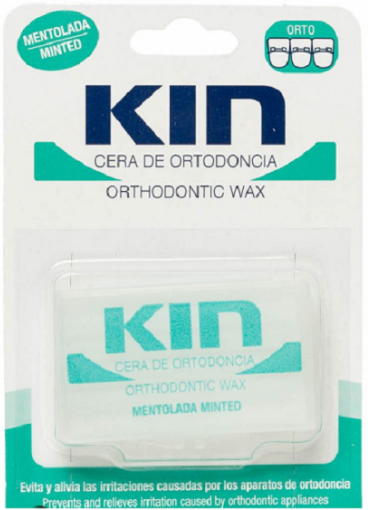
Kin Normal wax OrthodonticsHealth and Beauty Oral Care Kin Normal wax Orthodontics Orthodontic wax to prevent the brackets from rubbing the buccal mucose by covering the edges of the appliances and braces causing the pain. Contains five 4.5 mm x 55 mm bars. Guidelines for administration: Cut a piece of the orthodontic wax from the case and apply on the area (wire or bracket) causing the pain. Presentations: 5 barras6,32 £*Shipping: 3,99 £Secure redirect to the provider
-
Kin Mentholated wax OrthodonticsHealth and Beauty Oral Care Kin Mentholated wax Orthodontics Mentholated orthodontic wax to prevent the brackets from rubbing the buccal mucose by covering the edges of the appliances and braces. Contains five 4.5 mm x 55 mm wax bars. Guidelines for administration Cut off a piece of the orthodontic wax from the case and apply on the area (wire or bracket) causing the pain. Presentations: 5 barras6,32 £*Shipping: 3,99 £Secure redirect to the provider
-
Corega Orthodontics & Splints 36 TabletsHealth and Beauty Oral Care Corega Orthodontics & Splints 36 Tablets Effective cleaning of dental appliances. Eliminates 99.99% of bacteria. Corega braces and splint cleaning tablets provide fast, effective daily cleaning of any dental appliance. They gently remove stains without damaging the prosthesis, restoring its original color. They reduce the accumulation of bacterial plaque and tartar. They eliminate 99.99% of bacteria. Corega orthodontic and splint cleaning tablets are indicated for cleaning dental appliances such as:- Aligners or retainers. - Invisible orthodontics. - Discharge splints. - Removable metal appliances. - Sports mouthguards. Instructions for use: - Place 1 tablet in a glass with enough warm water to completely cover the dental appliance. - Submerge the prosthesis and let the product act for 3-5 minutes. - Remove the prosthesis and clean it with the solution using a soft brush. - Rinse the prosthesis with running water. - Discard the remaining solution after use.8,30 £*Shipping: 3,99 £Secure redirect to the provider
-
Corega Orthodontics & Splints Daily Cleanser 66 TabletsHealth and Beauty Oral Care Corega Orthodontics & Splints Daily Cleanser 66 Tablets Wearing braces can cause bacteria to build up and cause bad breath, so we've developed a daily antibacterial cleaner to help keep your braces clean and fresh. Our NEW Corega Orthodontics & Braces Antibacterial Daily Cleansing Tablets have been developed with Crystal Clear Technology—to help keep your braces looking their best, when used as directed. The cleanser formulation is designed to remove stains, help restore the original color, and also kill odor-causing bacteria and viruses.*13,69 £*Shipping: 3,99 £Secure redirect to the provider
-
What is needed for studying orthodontics?
To study orthodontics, one typically needs to have a bachelor's degree in a related field such as biology or chemistry. After completing a bachelor's degree, one must attend dental school to earn a Doctor of Dental Surgery (DDS) or Doctor of Dental Medicine (DMD) degree. Following dental school, additional training and education in orthodontics is required through a postgraduate orthodontic residency program, which can take an additional 2-3 years to complete. **
-
What are bio-arches or orthodontics?
Bio-arches, also known as orthodontics, are a branch of dentistry that focuses on correcting irregularities in the teeth and jaws. This can include issues such as misaligned teeth, overbites, underbites, and crowded teeth. Orthodontic treatment often involves the use of braces, aligners, and other dental appliances to gradually move the teeth into their proper positions. The goal of bio-arches or orthodontics is to improve the function and appearance of the teeth and jaws, as well as overall oral health. **
-
What is a palate anchorage in orthodontics?
In orthodontics, palate anchorage refers to using the roof of the mouth (palate) as a source of anchorage to help move teeth into their correct positions. This technique is often used when there is a need to create space or correct the alignment of teeth. Palate anchorage can be achieved through the use of devices such as palatal expanders or temporary anchorage devices (TADs) that are attached to the palate to provide additional support during orthodontic treatment. By utilizing palate anchorage, orthodontists can achieve more precise and effective tooth movement. **
-
What is a palatal anchorage in orthodontics?
Palatal anchorage in orthodontics refers to the use of the palate (the roof of the mouth) as a stable point of support to help move teeth into their correct positions. This technique is often used in cases where there is a need to prevent unwanted movement of certain teeth while adjusting the position of others. Palatal anchorage can be achieved through the use of devices such as palatal expanders or temporary implants that are attached to the palate to provide additional support during orthodontic treatment. **
Similar search terms for Orthodontics
-
Portfolio Penguin Eric Ries Collection 2 Books Set - The Lean Startup & The Startup Way - Paperback - Business & Entrepreneurship Bundle for Founders and ManagersThis two-book collection brings together Eric Ries's most influential works on modern entrepreneurship: The Lean Startup and The Startup Way. Together they set out a rigorous, practical methodology for building successful businesses in conditions of extreme uncertainty, then show how those same lean principles can be scaled up to transform established, bureaucratic organisations. The Lean Startup introduced the world to concepts such as the minimum viable product, validated learning, and the build-measure-learn feedback loop. Drawing on his own experiences as a founder and advisor, Ries argues that startups succeed not through grand five-year plans but through rapid experimentation and continuous improvement. Ideal for founders, managers, and anyone curious about innovation, this set is a complete primer on lean thinking from the man who coined the term. The books are in brand new condition, published by Portfolio Penguin, and are suitable for adult readers.10,99 £*Shipping: 2,99 £Secure redirect to the provider
-
Harper Business Smart Startups: What Every Entrepreneur Needs to Know by Catalina Daniels & James H. Sherman - Hardback - Business & Entrepreneurship Non FictionSmart Startups: What Every Entrepreneur Needs to Know is a candid guide to building a company that lasts. Written by two Harvard Business School classmates turned founders and angel investors, it goes beyond classroom theory to show what actually happens inside eighteen startups launched by fellow HBS graduates. Packed with honest case studies, hard-won lessons, and unexpected pitfalls, this book is essential reading for anyone serious about turning an idea into a viable business. The authors, Catalina Daniels and James H. Sherman, met as classmates at Harvard Business School, where they studied the fundamentals of entrepreneurship together. Years later, after each had founded and exited multiple companies and become active angel investors, they discovered that their real-world experiences often diverged sharply from the conventional wisdom they learned in school.11,99 £*Shipping: 2,99 £Secure redirect to the provider
-
Flythe Consulting Arika Wall Sconce Pair, Pair, Satin NickelThe Arika Wall Sconce Pair is an adaptation of old-fashioned light fixtures, with an appealing design that will complement modern decor. The lacquered solid brass sconces have 4.75 dia.x7 H clear glass hurricanes that will protect your standard...179,00 $*Shipping: 22,95 $Secure redirect to the provider
-
What is a functional analysis in orthodontics?
A functional analysis in orthodontics is a comprehensive evaluation of the relationship between the teeth, jaws, and surrounding structures to assess how they function together. This analysis helps orthodontists understand how the patient's bite and jaw movements may be contributing to any orthodontic issues. By examining factors such as jaw alignment, muscle function, and bite patterns, orthodontists can develop a treatment plan that addresses not only the alignment of the teeth but also the overall function of the patient's bite. This approach ensures that the orthodontic treatment not only improves the aesthetics of the smile but also enhances the overall function and health of the patient's bite. **
-
What is a palate anchor in orthodontics?
A palate anchor in orthodontics is a device used to widen the upper jaw. It is typically attached to the roof of the mouth and connected to braces or other orthodontic appliances. The palate anchor helps create more space in the mouth for crowded teeth and can also help correct bite issues. This device is often used in conjunction with other orthodontic treatments to achieve optimal results. **
-
What level of education is required for orthodontics?
To become an orthodontist, one must complete a bachelor's degree, followed by four years of dental school to earn a Doctor of Dental Surgery (DDS) or Doctor of Dental Medicine (DMD) degree. After dental school, orthodontists must complete an additional two to three years of specialized training in an orthodontic residency program. This means that a total of 10-11 years of education and training is required to become an orthodontist. **
-
Should one study orthodontics or pursue an apprenticeship?
The decision to study orthodontics or pursue an apprenticeship depends on individual career goals and interests. Studying orthodontics requires a significant investment of time and resources, but it can lead to a specialized and potentially lucrative career in dentistry. On the other hand, pursuing an apprenticeship can provide hands-on experience and practical skills in a specific trade or profession. Ultimately, individuals should consider their long-term career aspirations, personal strengths, and preferences before making a decision. **
* All prices are inclusive of VAT and, if applicable, plus shipping costs. The offer information is based on the details provided by the respective shop and is updated through automated processes. Real-time updates do not occur, so deviations can occur in individual cases. ** Note: Parts of this content were created by AI.