Buy firmengründung.eu ?
We are moving the project
firmengründung.eu .
Are you interested in purchasing the domain
firmengründung.eu ?
domain@kv-gmbh.de · 0541-91531010
Buy firmengründung.eu ?
What is the economic principle: the principle of minimum or the principle of maximum?
The principle of minimum and the principle of maximum are economic principles that relate to decision-making. The principle of minimum states that individuals or firms will seek to minimize their costs or inputs in order to achieve a certain level of output or outcome. On the other hand, the principle of maximum states that individuals or firms will seek to maximize their benefits or outputs given a certain level of inputs or costs. Both principles are important in guiding economic decision-making and resource allocation. **
What is the principle of the key-lock principle?
The key-lock principle is based on the idea that certain molecules or structures (keys) can fit into specific receptors or binding sites (locks) with high specificity and affinity. This principle is commonly used to describe the interaction between enzymes and their substrates, where the enzyme (lock) has a specific active site that perfectly fits the substrate (key), allowing for efficient catalysis. The key-lock principle highlights the importance of complementary shapes and chemical properties between molecules for effective interactions to occur. **

Similar search terms for Principle
Top-Angebote
Products related to Principle:
-
John Murray The 80/20 Principle : The Secret of Achieving More with Less: by Richard KochREAD THIS BOOK AND USE IT - TIM FERRISS Twenty years after its first publication, The 80/20 Principle is a global bestseller read by millions of highly effective people around the world. Now, it is more powerful and essential than ever. In the past, the principle gave those who used it a serious advantage.In the future, it will be the essential tool for anyone who wants to succeed. And it is powerful. Based on the counter-intuitive but widespread fact that 80% of results flow from 20% of causes, The 80/20 Principle shows how you can achieve much more with much less effort, time and resources, simply by concentrating on the all-important 20%.This major new edition includes four brand new chapters showing how to: Use the rise of networks to your advantage Benefit from more acute 90/10 and 99/1 forms of the principle Tap into your subconscious to exert a super-potent and amazingly favourable influence on your life Enjoy greater success with 5 mega rules to live by5,95 £*Shipping: 2,99 £Secure redirect to the provider
-
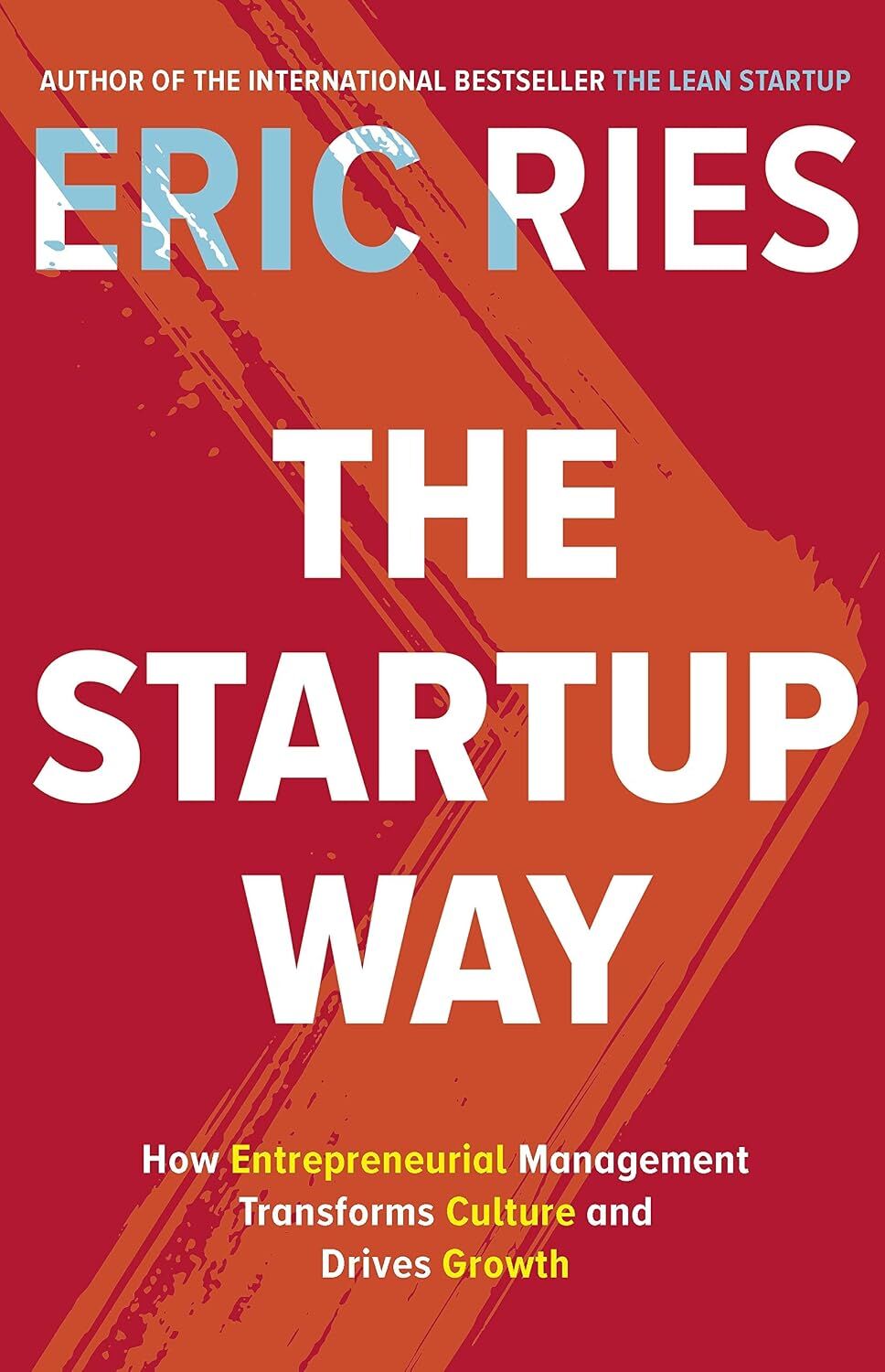
Portfolio Penguin Eric Ries Collection 2 Books Set - The Lean Startup & The Startup Way - Paperback - Business & Entrepreneurship Bundle for Founders and ManagersThis two-book collection brings together Eric Ries's most influential works on modern entrepreneurship: The Lean Startup and The Startup Way. Together they set out a rigorous, practical methodology for building successful businesses in conditions of extreme uncertainty, then show how those same lean principles can be scaled up to transform established, bureaucratic organisations. The Lean Startup introduced the world to concepts such as the minimum viable product, validated learning, and the build-measure-learn feedback loop. Drawing on his own experiences as a founder and advisor, Ries argues that startups succeed not through grand five-year plans but through rapid experimentation and continuous improvement. Ideal for founders, managers, and anyone curious about innovation, this set is a complete primer on lean thinking from the man who coined the term. The books are in brand new condition, published by Portfolio Penguin, and are suitable for adult readers.10,99 £*Shipping: 2,99 £Secure redirect to the provider
-
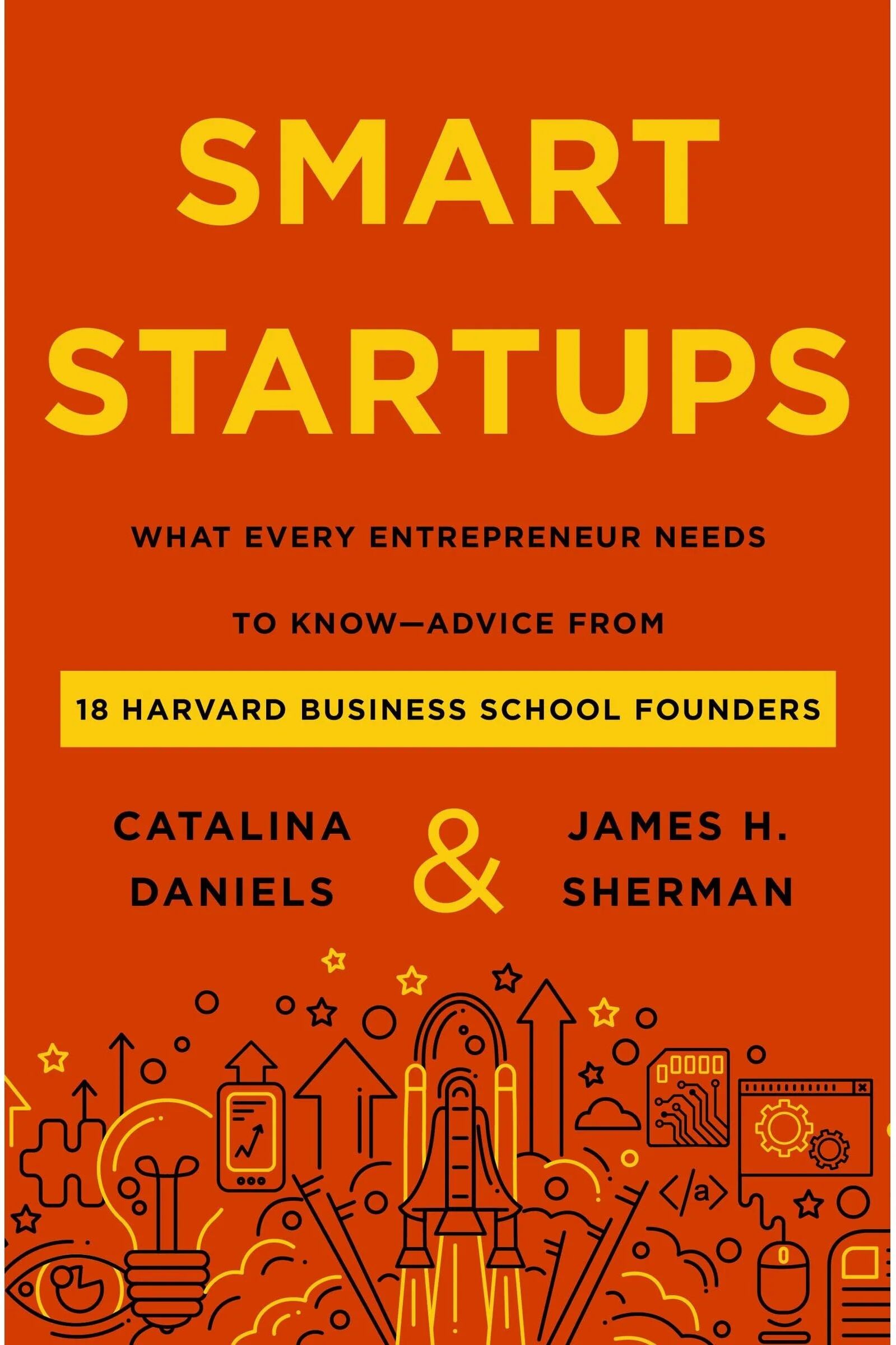
Harper Business Smart Startups: What Every Entrepreneur Needs to Know by Catalina Daniels & James H. Sherman - Hardback - Business & Entrepreneurship Non FictionSmart Startups: What Every Entrepreneur Needs to Know is a candid guide to building a company that lasts. Written by two Harvard Business School classmates turned founders and angel investors, it goes beyond classroom theory to show what actually happens inside eighteen startups launched by fellow HBS graduates. Packed with honest case studies, hard-won lessons, and unexpected pitfalls, this book is essential reading for anyone serious about turning an idea into a viable business. The authors, Catalina Daniels and James H. Sherman, met as classmates at Harvard Business School, where they studied the fundamentals of entrepreneurship together. Years later, after each had founded and exited multiple companies and become active angel investors, they discovered that their real-world experiences often diverged sharply from the conventional wisdom they learned in school.11,99 £*Shipping: 2,99 £Secure redirect to the provider
-
Nicholas Brealey Publishing The 80/20 Principle, Atomic Habits, How to Talk to Anyone Collection 3 Books Set by Richard Koch, James Clear, Leil LowndesThe 80/20 Principle The unspoken corollary to the 80/20 principle is that little of what you spend your time on actually counts. But by concentrating on those things that do, you can unlock the enormous potential of the magic 20 percent. Discover how to identify the few methods that will lead to great results, and use them alone. Avoid hard work. Don't push water uphill. Be very selective in what you do. Have a great life. Atomic Habits People think that when you want to change your life, you need to think big. But world-renowned habits expert James Clear has discovered another way. He knows that real change comes from the compound effect of hundreds of small decisions: doing two push-ups a day, waking up five minutes early, or holding a single short phone call. He calls them atomic habits. In this ground-breaking book, Clears reveals exactly how these minuscule changes can grow into such life-altering outcomes. How to Talk to Anyone Never be at a loss for words again! Perfect your people skills with his fun, witty and informative guide, containing 92 little tricks to create big success in personal and business relationships. In How To Talk To Anyone, bestselling relationships author and internationally renowned life coach Leil Lowndes reveals the secrets and psychology behind successful communication16,50 £*Shipping: 2,99 £Secure redirect to the provider


-
What is the ping-pong principle or the hourglass principle?
The ping-pong principle, also known as the hourglass principle, is a communication strategy where information is exchanged back and forth between two parties in a structured and concise manner. It involves each party taking turns to speak or provide input, similar to a game of ping-pong. This principle ensures that communication is balanced, effective, and allows for active listening and engagement from both parties. It helps to maintain a focused and productive conversation by preventing one party from dominating the discussion. **
-
What is the rocket principle and the principle of recoil?
The rocket principle states that for every action, there is an equal and opposite reaction. This means that when a rocket expels gas out of its engines, the force of the gas pushing out is matched by an equal force pushing the rocket in the opposite direction. The principle of recoil is similar, stating that when a gun is fired, the force of the bullet being expelled from the barrel is matched by an equal force pushing the gun in the opposite direction. Both principles are based on Newton's third law of motion, which describes the relationship between the forces acting on two interacting objects. **
-
Does the principle of solidarity correspond to the principle of equivalence?
The principle of solidarity and the principle of equivalence are related but not the same. The principle of solidarity emphasizes mutual support and collective responsibility within a community, while the principle of equivalence focuses on equal treatment and fairness. Solidarity often involves individuals or groups providing assistance or resources to those in need, even if they have not contributed equally, whereas equivalence typically requires treating individuals or groups in the same way based on certain criteria. Both principles aim to promote fairness and justice, but they operate in slightly different ways. **
-
What are the principle of operation and the principle of object?
The principle of operation refers to the fundamental method or process by which something functions or operates. It outlines the underlying rules or guidelines that govern how a system or device works. On the other hand, the principle of object pertains to the main focus or purpose of a particular entity or concept. It defines the central idea or goal that the object is designed to achieve or represent. Both principles are essential in understanding the functionality and significance of a system or object. **

What is the principle of maximization or the principle of minimization?
The principle of maximization or minimization is a decision-making principle that involves choosing the best option from a set of alternatives in order to maximize benefits or minimize costs. In economics, this principle is often applied to the behavior of individuals, firms, or governments when making choices about resource allocation, production, consumption, or investment. The principle of maximization suggests that decision-makers seek to maximize their utility, profits, or other desirable outcomes, while the principle of minimization suggests that decision-makers seek to minimize their costs, risks, or other undesirable outcomes. These principles are fundamental to understanding how economic agents make rational choices in pursuit of their goals. **
Is the principle of officiality and the principle of legality still valid?
Yes, the principles of officiality and legality are still valid in many legal systems around the world. The principle of officiality emphasizes the importance of official documents and procedures in legal matters, while the principle of legality ensures that all actions taken by authorities are based on existing laws and regulations. These principles help maintain order, fairness, and accountability in legal processes. While there may be variations in how these principles are applied in different jurisdictions, they continue to play a crucial role in upholding the rule of law. **
Top-Angebote
Products related to Principle:
-
The Talos Principle 2 Steam CD KeyThe Talos Principle 2: Official Global PC Steam CD Key The Talos Principle 2 is a thought-provoking first-person puzzle adventure game developed by Croteam and published by Devolver Digital. It was released on November 2, 2023 , for PC (Windows) Set hundreds of years after its critically acclaimed predecessor, The Talos Principle , this sequel plunges players into a new world where biological humanity is extinct. In its place, a utopian civilization of sentient robots flourishes, dedicated to preserving human culture and avoiding the mistakes of their vanished creators. You awaken as the 1000th—and supposedly final—robot born into this society. However, your arrival triggers unforeseen events. A mysterious megastructure, hiding immense power and secrets, beckons a small expedition from your robot society to a distant, enigmatic island. You become part of this expedition, tasked with exploring the island's vast landscapes, solving intricate puzzles, and uncovering the truth behind this new, compelling mystery. As you delve deeper, you're confronted with profound philosophical questions about the nature of consciousness, the purpose of civilization, the pursuit of progress, and the potential pitfalls of repeating humanity's past. Key Features: A New Generation of Puzzles: The game builds upon the original's acclaimed puzzle design with a wide array of new challenges. These include clever metapuzzles and highly demanding "Gold puzzles" for those seeking ultimate mastery. New mechanics such as gravity manipulation, mind transference, and complex laser beam interactions join familiar elements, creating a fresh yet distinctly Talos Principle experience. A Philosophical Odyssey: The narrative is a central pillar, offering a deeply thought-provoking, character-driven story penned by returning writers Jonas Kyratzes and Tom Jubert, joined by Verena Kyratzes. Through your interactions with companion robots, dialogue choices, and discovery of lore, you'll engage with complex ideas on societal growth, the ethics of ambition, and the very meaning of existence, leading to multiple possible endings. Brave New World to Explore: Venture through over a dozen expansive, all-new environments. From the bustling, utopian city of New Jerusalem to the varied and stunning landscapes of the mysterious island—featuring lush forests, arid deserts, and towering mountains—each area offers both beauty and secrets. Players can explore these semi-open environments, discovering long-buried historical fragments and hidden puzzles. Compelling Characters and Story: Interact with a diverse cast of robot companions, each with their own personalities, viewpoints, and backstories. Their philosophical debates and personal relationships add depth and humanity (despite their synthetic nature) to the overarching narrative. Stunning Visuals and Sound: Powered by Unreal Engine 5, the game delivers breathtaking environments and intricate designs. The immersive experience is completed by a ric…7,16 £*Shipping: 0,00 £Secure redirect to the provider
-
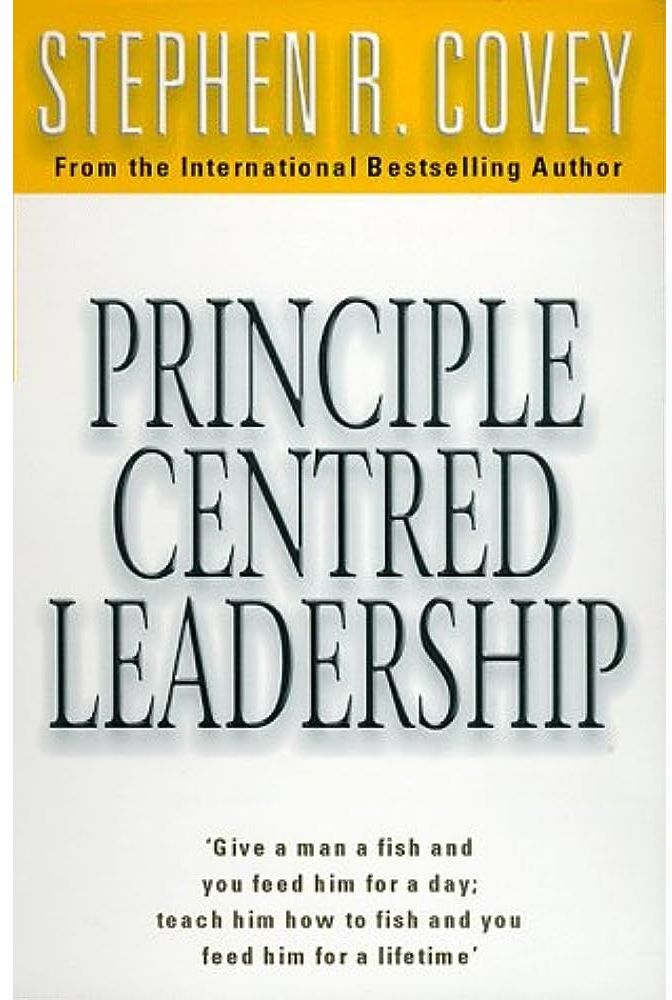
Simon & Schuster Principle Centred Leadership by Stephen R CoveyPRINCIPLE CENTRED LEADERSHIP will help solve these dilemmas - and many others:* how do we achieve a wise and renewing balance between work and family in the midst of constant pressures and crises?* how do we unleash the creativity, talent and energy of the vast majority of the work force, whose jobs neither require nor reward such resources?* how can we have a culture characterised by change, flexibility and continuous improvement and still maintain a sense of stability and security?* how do we create team spirit and harmony among people and departments that have been criticising and attacking each other for years?* how do we get people and culture aligned with strategy, so that everyone in an organisation is as committed to the strategy as those who formulated it?6,99 £*Shipping: 2,99 £Secure redirect to the provider
-
John Murray The 80/20 Principle : The Secret of Achieving More with Less: by Richard KochREAD THIS BOOK AND USE IT - TIM FERRISS Twenty years after its first publication, The 80/20 Principle is a global bestseller read by millions of highly effective people around the world. Now, it is more powerful and essential than ever. In the past, the principle gave those who used it a serious advantage.In the future, it will be the essential tool for anyone who wants to succeed. And it is powerful. Based on the counter-intuitive but widespread fact that 80% of results flow from 20% of causes, The 80/20 Principle shows how you can achieve much more with much less effort, time and resources, simply by concentrating on the all-important 20%.This major new edition includes four brand new chapters showing how to: Use the rise of networks to your advantage Benefit from more acute 90/10 and 99/1 forms of the principle Tap into your subconscious to exert a super-potent and amazingly favourable influence on your life Enjoy greater success with 5 mega rules to live by5,95 £*Shipping: 2,99 £Secure redirect to the provider
-
Portfolio Penguin Eric Ries Collection 2 Books Set - The Lean Startup & The Startup Way - Paperback - Business & Entrepreneurship Bundle for Founders and ManagersThis two-book collection brings together Eric Ries's most influential works on modern entrepreneurship: The Lean Startup and The Startup Way. Together they set out a rigorous, practical methodology for building successful businesses in conditions of extreme uncertainty, then show how those same lean principles can be scaled up to transform established, bureaucratic organisations. The Lean Startup introduced the world to concepts such as the minimum viable product, validated learning, and the build-measure-learn feedback loop. Drawing on his own experiences as a founder and advisor, Ries argues that startups succeed not through grand five-year plans but through rapid experimentation and continuous improvement. Ideal for founders, managers, and anyone curious about innovation, this set is a complete primer on lean thinking from the man who coined the term. The books are in brand new condition, published by Portfolio Penguin, and are suitable for adult readers.10,99 £*Shipping: 2,99 £Secure redirect to the provider
-
What is the economic principle: the principle of minimum or the principle of maximum?
The principle of minimum and the principle of maximum are economic principles that relate to decision-making. The principle of minimum states that individuals or firms will seek to minimize their costs or inputs in order to achieve a certain level of output or outcome. On the other hand, the principle of maximum states that individuals or firms will seek to maximize their benefits or outputs given a certain level of inputs or costs. Both principles are important in guiding economic decision-making and resource allocation. **
-
What is the principle of the key-lock principle?
The key-lock principle is based on the idea that certain molecules or structures (keys) can fit into specific receptors or binding sites (locks) with high specificity and affinity. This principle is commonly used to describe the interaction between enzymes and their substrates, where the enzyme (lock) has a specific active site that perfectly fits the substrate (key), allowing for efficient catalysis. The key-lock principle highlights the importance of complementary shapes and chemical properties between molecules for effective interactions to occur. **
-
What is the ping-pong principle or the hourglass principle?
The ping-pong principle, also known as the hourglass principle, is a communication strategy where information is exchanged back and forth between two parties in a structured and concise manner. It involves each party taking turns to speak or provide input, similar to a game of ping-pong. This principle ensures that communication is balanced, effective, and allows for active listening and engagement from both parties. It helps to maintain a focused and productive conversation by preventing one party from dominating the discussion. **
-
What is the rocket principle and the principle of recoil?
The rocket principle states that for every action, there is an equal and opposite reaction. This means that when a rocket expels gas out of its engines, the force of the gas pushing out is matched by an equal force pushing the rocket in the opposite direction. The principle of recoil is similar, stating that when a gun is fired, the force of the bullet being expelled from the barrel is matched by an equal force pushing the gun in the opposite direction. Both principles are based on Newton's third law of motion, which describes the relationship between the forces acting on two interacting objects. **
Similar search terms for Principle
-
Harper Business Smart Startups: What Every Entrepreneur Needs to Know by Catalina Daniels & James H. Sherman - Hardback - Business & Entrepreneurship Non FictionSmart Startups: What Every Entrepreneur Needs to Know is a candid guide to building a company that lasts. Written by two Harvard Business School classmates turned founders and angel investors, it goes beyond classroom theory to show what actually happens inside eighteen startups launched by fellow HBS graduates. Packed with honest case studies, hard-won lessons, and unexpected pitfalls, this book is essential reading for anyone serious about turning an idea into a viable business. The authors, Catalina Daniels and James H. Sherman, met as classmates at Harvard Business School, where they studied the fundamentals of entrepreneurship together. Years later, after each had founded and exited multiple companies and become active angel investors, they discovered that their real-world experiences often diverged sharply from the conventional wisdom they learned in school.11,99 £*Shipping: 2,99 £Secure redirect to the provider
-
Nicholas Brealey Publishing The 80/20 Principle, Atomic Habits, How to Talk to Anyone Collection 3 Books Set by Richard Koch, James Clear, Leil LowndesThe 80/20 Principle The unspoken corollary to the 80/20 principle is that little of what you spend your time on actually counts. But by concentrating on those things that do, you can unlock the enormous potential of the magic 20 percent. Discover how to identify the few methods that will lead to great results, and use them alone. Avoid hard work. Don't push water uphill. Be very selective in what you do. Have a great life. Atomic Habits People think that when you want to change your life, you need to think big. But world-renowned habits expert James Clear has discovered another way. He knows that real change comes from the compound effect of hundreds of small decisions: doing two push-ups a day, waking up five minutes early, or holding a single short phone call. He calls them atomic habits. In this ground-breaking book, Clears reveals exactly how these minuscule changes can grow into such life-altering outcomes. How to Talk to Anyone Never be at a loss for words again! Perfect your people skills with his fun, witty and informative guide, containing 92 little tricks to create big success in personal and business relationships. In How To Talk To Anyone, bestselling relationships author and internationally renowned life coach Leil Lowndes reveals the secrets and psychology behind successful communication16,50 £*Shipping: 2,99 £Secure redirect to the provider
-
Picador Bad Blood: Secrets and Lies in a Silicon Valley Startup by John Carreyrou - Paperback - True Crime Business Book - Theranos Scandal ExposéBad Blood is John Carreyrou's Pulitzer Prize-winning investigation into Theranos, the blood-testing startup once valued at over $9 billion before collapsing into one of the biggest corporate frauds in American history. This gripping true-crime business narrative follows founder Elizabeth Holmes from Silicon Valley darling to disgraced fraudster, exposing the culture of secrecy, intimidation, and deception that hid a technology which simply didn't work — with devastating consequences for real patients. In 2014, Elizabeth Holmes was celebrated as the next Steve Jobs: a charismatic Stanford dropout whose startup promised to revolutionise healthcare with a single drop of blood. Backed by high-profile investors and board members, Theranos raised hundreds of millions of dollars on the promise of miniaturised blood-testing devices that could run hundreds of tests. This book is a paperback edition published by Picador, suitable for adult readers (18+).4,99 £*Shipping: 2,99 £Secure redirect to the provider
-
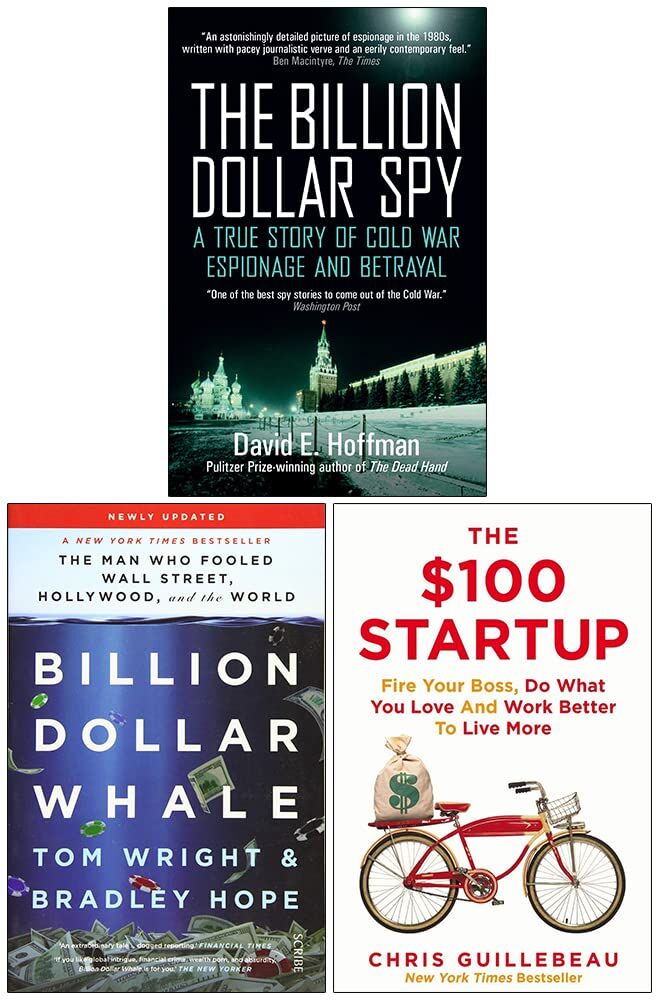
Various Publishers Billion Dollar Spy, Billion Dollar Whale, The $100 Startup - 3 Books Collection Set - Paperback - True Crime, Finance & Business Non-Fiction Gift SetThis three-book non-fiction collection includes The Billion Dollar Spy by David E. Hoffman, Billion Dollar Whale by Tom Wright and Bradley Hope, and The $100 Startup by Chris Guillebeau. The books offer gripping true stories of espionage and financial fraud, alongside practical entrepreneurship advice. The Billion Dollar Spy uncovers Cold War spy-craft in Moscow, Billion Dollar Whale exposes one of history's largest financial scandals, and The $100 Startup delivers a hands-on blueprint for building a business from scratch. The books are in new condition, published by Icon Books, Scribe UK, and Pan Macmillan, and are suitable for adult readers.13,99 £*Shipping: 2,99 £Secure redirect to the provider
-
Does the principle of solidarity correspond to the principle of equivalence?
The principle of solidarity and the principle of equivalence are related but not the same. The principle of solidarity emphasizes mutual support and collective responsibility within a community, while the principle of equivalence focuses on equal treatment and fairness. Solidarity often involves individuals or groups providing assistance or resources to those in need, even if they have not contributed equally, whereas equivalence typically requires treating individuals or groups in the same way based on certain criteria. Both principles aim to promote fairness and justice, but they operate in slightly different ways. **
-
What are the principle of operation and the principle of object?
The principle of operation refers to the fundamental method or process by which something functions or operates. It outlines the underlying rules or guidelines that govern how a system or device works. On the other hand, the principle of object pertains to the main focus or purpose of a particular entity or concept. It defines the central idea or goal that the object is designed to achieve or represent. Both principles are essential in understanding the functionality and significance of a system or object. **
-
What is the principle of maximization or the principle of minimization?
The principle of maximization or minimization is a decision-making principle that involves choosing the best option from a set of alternatives in order to maximize benefits or minimize costs. In economics, this principle is often applied to the behavior of individuals, firms, or governments when making choices about resource allocation, production, consumption, or investment. The principle of maximization suggests that decision-makers seek to maximize their utility, profits, or other desirable outcomes, while the principle of minimization suggests that decision-makers seek to minimize their costs, risks, or other undesirable outcomes. These principles are fundamental to understanding how economic agents make rational choices in pursuit of their goals. **
-
Is the principle of officiality and the principle of legality still valid?
Yes, the principles of officiality and legality are still valid in many legal systems around the world. The principle of officiality emphasizes the importance of official documents and procedures in legal matters, while the principle of legality ensures that all actions taken by authorities are based on existing laws and regulations. These principles help maintain order, fairness, and accountability in legal processes. While there may be variations in how these principles are applied in different jurisdictions, they continue to play a crucial role in upholding the rule of law. **
* All prices are inclusive of VAT and, if applicable, plus shipping costs. The offer information is based on the details provided by the respective shop and is updated through automated processes. Real-time updates do not occur, so deviations can occur in individual cases. ** Note: Parts of this content were created by AI.